Systematic Denial of Childhood in Indian Occupied Jammu & Kashmir
Systematic Denial of Childhood in Indian Occupied Jammu & Kashmir
A Fact-Based Assessment


By Mehr un Nisa Rehman
INTRODUCTION
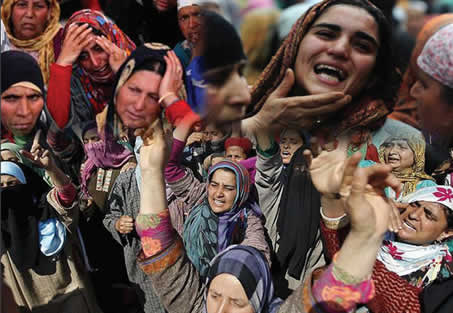
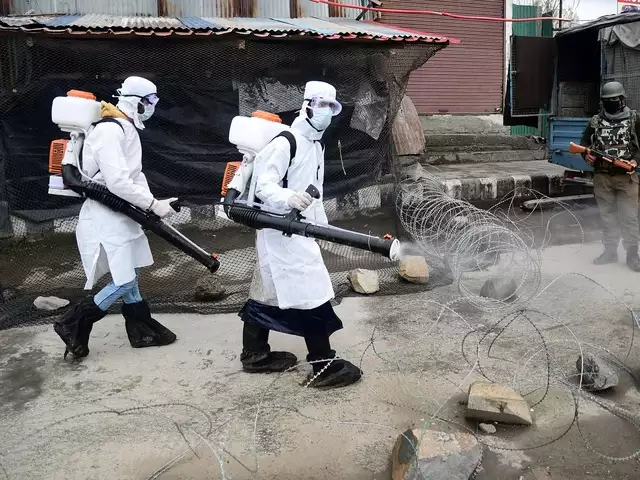
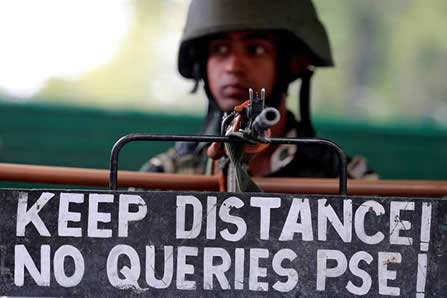
Childhood in Indian occupied Jammu and Kashmir exists inside a prolonged conflict environment where armed presence, civilian insecurity and institutional disruption intersect with daily life. The region maintains an estimated 800,000 to 900,000 occupation troops deployed across towns, villages, border belts and urban corridors. This density places children in constant proximity to checkpoints, patrol movement, cordon operations and surveillance systems that regulate ordinary mobility and outdoor activity. Childhood space operates under controlled circulation rather than open social development, with movement frequently interrupted by security protocols and identity verification procedures.

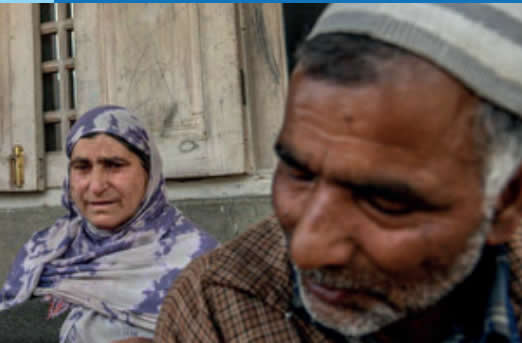
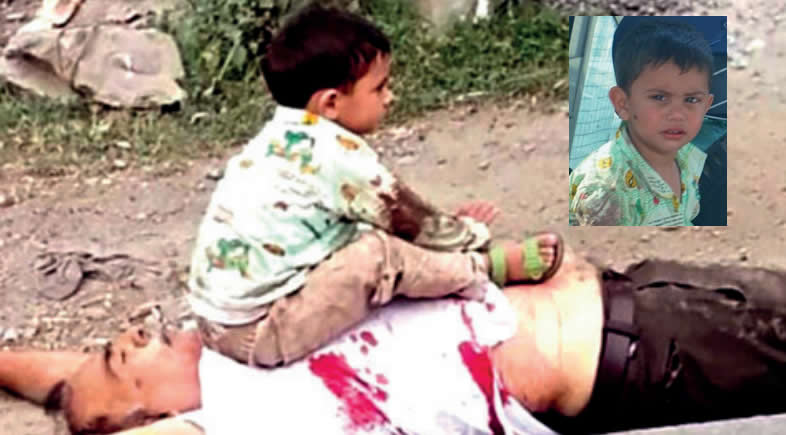
The impact becomes more severe in households affected by conflict-related loss. The data indicates that from January 1989 to March 2026, a total of 108,007 children have been orphaned in Jammu and Kashmir. This figure reflects the long-term human cost of sustained conflict. The situation has continued in recent years, with 232 children orphaned since 5 August 2019. These numbers represent children who grow up without parental support in an already militarized environment.
The scale of child loss establishes the gravity of this condition. Human rights documentation released on World Children’s Day 2025 records 936 children killed in IoK between 1989 and 2025. The same dataset records 108,007 children orphaned due to civilian deaths during the same period. These figures define a generation where parental absence enters early life through conflict-related fatalities, detentions, or enforced separation, producing long-term household instability across multiple districts including Baramulla, Anantnag, Pulwama, Kupwara and Srinagar.
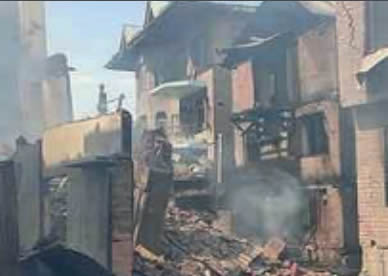
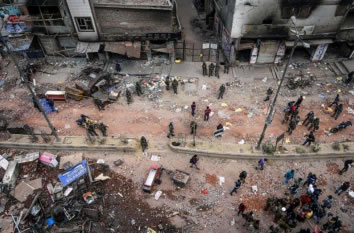
Security operations intensify child exposure to coercive environments. Following the 22 April 2025 Pahalgam attack that killed 26 civilians, coordinated cordon-and-search operations expanded across South and North Kashmir. Districts such as Anantnag, Shopian, Pulwama and Kupwara recorded repeated house searches and movement restrictions. Children in border districts including Rajouri and Kupwara reported avoidance of open fields due to fear of live firing zones and unexploded ordnance. The presence of bunkers near residential clusters in several locations compresses childhood activity into confined domestic spaces.
Direct engagement of minors with security detention systems adds another layer. In December 2025, three ninth-grade students from Baramulla were taken into custody during return from school and interrogated under allegations of anti-state activity. Family accounts and local reporting confirm denial of clear charges and restricted communication access during detention. Such incidents extend coercive interaction into adolescent schooling years, placing minors within investigative frameworks that normally apply to adult populations.
The psychological indicators among children show sustained distress of patterns. Clinical assessments conducted by IMHANS Kashmir with UNICEF support in May 2025 across Uri documented widespread symptoms among children exposed to conflict events, including panic episodes, insomnia, recurrent nightmares, irritability and persistent fear of renewed violence. The IMHANS Child Guidance and Wellbeing Centre recorded a sharp rise in child mental health cases in the 7–14 age group during 2022–2023 reporting cycles. National Crime Records Bureau data from 2022 further placed Jammu and Kashmir at the highest level of attempted suicide cases among Indian regions, marking severe psychological strain among youth populations.
Health outcomes among children also show critical deprivation of patterns. The Ministry of Statistics and Programme Implementation report “Children in India 2025” recorded that 72.7 percent of children under five in Jammu and Kashmir suffer from anaemia. The data includes 73.9 percent male children and 71.4 percent female children, with rural prevalence reaching 73.5 percent. Medical assessments link this condition to dietary deficiency, limited access to iron-rich nutrition and delayed medical intervention in early childhood stages.
Family separation patterns intensify through detention and displacement. Multiple documented cases from 2025 show mothers detained or deported under security directives following the Pahalgam incident, leaving children separated from primary caregivers. In Baramulla, a 73-year-old household case recorded the deportation of a mother while her children remained in Kashmir under family fragmentation conditions. In Poonch, reported cases show newborn children separated from mothers during cross-border deportation procedures, creating early-life separation trauma documented in local reporting.
Child trafficking vulnerability rises in this environment of displacement and weak monitoring. Government-linked systems such as TrackChild and Khoya-Paya record persistent unresolved missing child cases across districts, with monitoring gaps reported in rural and border regions during 2024–2025 cycles. Disruption of community structures through migration reduces protective supervision, while fragmented reporting systems limit real-time tracking of vulnerable minors.
Child labour pressures increase in economically strained households affected by prolonged conflict conditions. Households facing detention of earning members or loss of livelihood stability shift children into informal work sectors in both rural and peri-urban areas, particularly in districts with high unemployment and limited industrial activity.
The combination of militarized space, restricted recreation infrastructure, health deprivation, psychological stress and household fragmentation constructs a childhood environment shaped by constrained mobility, limited protection systems and reduced developmental security.
INTERNATIONAL LEGAL FRAMEWORK ON PROTECTION OF CHILDREN IN CONFLICT ZONES
International law establishes a comprehensive and binding system of protections for children affected by armed conflict. It recognises children as a uniquely vulnerable group requiring special safeguards, uninterrupted access to basic rights and protection from violence, displacement, recruitment and separation from families. These obligations arise from multiple layers of international humanitarian law, human rights law, Security Council resolutions and global policy declarations that collectively impose duties on states during both war and internal conflict situations.
i. Geneva Conventions and Additional Protocols
The 1949 Geneva Conventions form the backbone of International Humanitarian Law and apply in all armed conflict situations. Common Article 3 prohibits violence, cruel treatment and degrading practices against civilians, including children. The Additional Protocol I (1977) and Additional Protocol II (1977) explicitly strengthen child protection by prohibiting recruitment of children under 15, mandating special care for children affected by conflict and requiring respect for family unity, education and protection from direct participation in hostilities.
ii. Convention on the Rights of the Child (CRC)
The Convention on the Rights of the Child (1989) provides the most comprehensive global legal framework for child protection. It guarantees the right to life under Article 6, protection from violence under Article 19, access to healthcare under Article 24, education under Article 28 and special protection measures during armed conflict under Article 38. It obligates states to ensure that children are protected from all forms of physical or mental harm, even in emergency and conflict conditions.
iii. Optional Protocol to the CRC on Armed Conflict
The Optional Protocol to the Convention on the Rights of the Child on the involvement of children in armed conflict (2000) raises international standards by prohibiting compulsory recruitment under 18 and limiting state and non-state actors from involving children in hostilities. It also requires states to provide rehabilitation, psychological recovery and reintegration support for children affected by armed conflict.
iv. Universal Declaration of Human Rights (UDHR)
The Universal Declaration of Human Rights (1948) establishes foundational rights applicable to all individuals, including children. Articles 3, 25 and 26 guarantee the right to life, security, adequate living standards and education. These principles extend to children in conflict zones and serve as the moral and legal basis for subsequent binding treaties.
v. International Covenant on Civil and Political Rights (ICCPR)
The ICCPR (1966) strengthens child protection through Article 24, which requires states to provide special protection measures for children as minors. It also guarantees rights to life, liberty and protection from arbitrary detention, all of which become critical in conflict-affected environments where children are exposed to security operations.
vi. International Covenant on Economic, Social and Cultural Rights (ICESCR)
The ICESCR (1966) ensures the right to education, health and adequate living standards under Articles 10, 12 and 13. These rights remain applicable during conflict and impose obligations on states to maintain essential services for children even in unstable or militarized regions.
vii. United Nations Security Council Resolutions on Children and Armed Conflict
The UN Security Council has developed a dedicated framework addressing children in conflict situations. Resolution 1261 (1999) first placed children in armed conflict on the global agenda. Resolution 1612 (2005) created a monitoring and reporting mechanism for grave violations. Resolution 1882 (2009) expanded violations to include killing, maiming and sexual violence against children. Resolution 1998 (2011) added attacks on schools and hospitals, reinforcing protection of education and healthcare systems during conflict.
viii. Paris Principles (2007)
The Paris Principles provide international guidelines for the protection, demobilization and reintegration of children associated with armed forces or armed groups. They emphasize rehabilitation, psychosocial support, education reintegration and family reunification as essential components of child protection in post-conflict settings.
ix. Safe Schools Declaration (2015)
The Safe Schools Declaration is a global political commitment aimed at protecting education during armed conflict. It promotes safe access to education, discourages the military use of schools and seeks to ensure continuity of learning for children even in conflict-affected areas.
x. African Charter on the Rights and Welfare of the Child (1990)
The African Charter provides regional but influential protections that prohibit child recruitment into armed conflict and mandate special protection for displaced and vulnerable children. It reinforces global norms on safeguarding children in war-affected environments.
xi. Customary International Humanitarian Law (ICRC Framework)
Customary international humanitarian law, as documented by the International Committee of the Red Cross (ICRC), establishes binding principles such as distinction between civilians and combatants, proportionality in the use of force and precaution in attacks. These principles require all parties to conflict to protect children as civilians under all circumstances.
International law, taken together, creates a unified legal obligation that demands maximum protection for children in conflict zones. It requires states to prevent harm, protect family unity, ensure access to education and healthcare, prohibit recruitment and violence and provide rehabilitation where violations occur.
PHYSICAL INJURIES, DISABILITY & LIFELONG IMPAIRMENT
i. Pellet Blindness and Lifelong Disability Among Minors
The use of pellet guns has created a generation of visually impaired children in IAK. The events of July 2016 initiated this pattern. The killing of Burhan Wani triggered protests and the state responded with widespread pellet firing in civilian areas. The Jammu and Kashmir government confirmed in January 2018 that 6,221 individuals were injured by pellets. This number included a significant proportion of minors.

The medical evidence shows the scale of harm. SMHS Hospital in Srinagar treated 777 patients with pellet-related eye injuries between July and November 2016. Doctors confirmed that many of these patients were children. The nature of pellet weapons explains this outcome. The guns discharge hundreds of metallic pellets that spread across a wide area. These pellets strike eyes, faces and upper bodies. Children become victims even when they stand inside homes or walk on nearby streets.
The data shows that 14 percent of pellet victims were below the age of 15. This figure establishes that minors formed a consistent segment of those injured. The injuries required complex surgeries under anaesthesia. Many children underwent multiple procedures without regaining vision. Studies between 2016 and 2019 recorded at least 1,459 serious eye injuries. At least 139 individuals lost vision permanently in one or both eyes.
The individual cases confirm this pattern. In July 2016, 14-year-old Insha Mushtaq lost vision in both eyes after pellets struck her near her home in Shopian. In the same period, eight-year-old Asif Rashid and 13-year-old Mir Arafat sustained pellet injuries during firing incidents. Nine-year-old Tamana Ashraf suffered injuries while looking out of her home window. Eight-year-old Junaid Ahmad sustained chest injuries after pellet fire at close range.
The cases extend across districts. In Anantnag, nine-year-old Asif Ahmad Sheikh lost the ability to attend school and live normally after pellet injuries. In Baramulla, 17-year-old Ulfat Hameed could not sit for her class 10 exams due to injuries. Bilal Ahmad Bhat, also 17, faced delayed treatment because hospitals lacked capacity. These cases show that injuries disrupted education and daily life.
The pattern continued into 2018. In Shopian, 18-month-old Hiba Nisar suffered pellet injury to her eye inside her home. This case proves that even infants were not protected from the spread of pellets. The injuries did not require participation in protests. Presence in a militarized environment was enough.
The continuation of pellet use after 2019 confirms policy continuity. Hospitals in Srinagar continued to receive cases during encounters and localized clashes. The state did not impose a ban despite evidence of mass blindness. This decision ensured that children remained exposed to the same risks.
The outcome is permanent disability. Blindness removes access to education, mobility and independence. These children enter adulthood with severe limitations. This is not an unintended result. The use of pellet guns in civilian areas produces predictable harm.
i. Firearms, Tear Gas and Injury During Post-2019 Operations
The use of force against civilians did not end after August 2019. The revocation of Article 370 expanded the security presence and intensified operations in residential areas. This shift exposed children to new forms of injury.
The state continued to use live ammunition, tear gas and PAVA shells during cordon-and-search operations and encounters. These operations take place inside villages and towns. Children living in these areas remain within the range of fire and chemical exposure.
Bullet injuries cause severe damage. Stray bullets and crossfire incidents have injured minors in districts such as Shopian, Pulwama and Baramulla in recent years. These injuries result in spinal damage, organ trauma and long-term disability. Children do not need to participate in protests. They become victims due to proximity.
The use of tear gas and PAVA shells adds another layer of harm. These munitions cause burns to the eyes and skin. They create respiratory distress. Children inhale these gases when forces deploy them in dense neighborhoods. Younger children face greater risk due to weaker respiratory systems.
The medical system continues to report such cases after 2019. Doctors at SMHS Hospital and other facilities have confirmed recurring injuries linked to these operations. The persistence of such injuries shows that the state has not changed its methods.
The argument that these are controlled measures fails when outcomes include permanent disability. The deployment of such weapons in civilian spaces ensures that children remain exposed. The environment itself becomes unsafe.
ii. Landmines and Explosive Hazards Affecting Children
The presence of landmines and unexploded ordnance continues to injure children across Jammu and Kashmir. This threat remains active in 2025 and 2026. It is not limited to past conflicts.
Recent incidents confirm ongoing danger. In April 2026, a 6-year-old boy, Muhammad Rizwan, was injured in a landmine explosion near the Line of Control in Poonch district. In February 2026, a 16-year-old boy sustained injuries in another blast in Poonch while working near a water body. In September 2025, a 17-year-old boy died after a landmine explosion in Anantnag district. In October 2025, four children were injured while playing in an open field in Hyundara village.
These cases show that children remain direct victims. They encounter explosives during daily activities such as playing or assisting in agriculture. Landmines do not distinguish between military targets and civilians.
The long-term data reinforces this reality. Between 1999 and 2015, thousands of people were killed or injured due to mines and explosive remnants. A study in Poonch district estimated that more than 700 individuals were disabled by mines between 1998 and 2008. Many of these victims were minors at the time.
The terrain increases risk. Rainfall, snow and landslides shift mines from their original positions. Areas considered safe become dangerous. Children cannot identify these hidden threats. The absence of proper marking systems increases accidental encounters.
The legacy of military zones also contributes. The Tosa Maidan area in Budgam, used for artillery exercises from 1965 to 2014, left behind unexploded ordnance. Official data recorded more than 150 people disabled. Children from nearby villages entered the area after its reopening and encountered these hazards.
The lack of systematic demining reflects policy priorities. Authorities treat landmines as a military issue rather than a humanitarian concern. This approach leaves civilian areas contaminated. Families restrict children from accessing land due to fear. This affects mobility, education and development.
iii. Torture Practices and Youth Disability
The system of detention and interrogation also produces physical disability among adolescents. Reports from Amnesty International and the Office of the United Nations High Commissioner for Human Rights document the use of torture methods in the region.
These methods include electric shocks, severe beatings, burning with heated objects and suspension. These practices damage muscles, nerves and internal organs. Victims often leave detention with permanent impairment.
Adolescents remain vulnerable in this system. Security operations frequently detain young boys. These detainees face physical abuse that results in fractures, nerve damage and chronic pain. These injuries prevent return to normal life.
The broader data on disability supports this pattern. Thousands of Kashmiris have been disabled due to conflict-related violence. Pellet injuries alone have pushed more than 200 individuals toward permanent vision loss. Many of these victims were young at the time of injury.
The use of force against protesters also contributes. Pellet fire, baton charges and direct impact munitions target upper body regions. This results in head injuries and fractures. These injuries create long-term impairment.
The legal framework sustains this environment. Laws such as AFSPA limit accountability for security personnel. This reduces the likelihood of investigation. The absence of accountability allows repetition of harmful practices.
The healthcare system fails to address these injuries. Rural areas lack specialized facilities. Victims face delays in treatment. Rehabilitation services such as prosthetics and physiotherapy remain limited. Families bear the cost of care.
The result is a cycle of disability. Children and adolescents suffer injuries. The system fails to provide recovery. These injuries become permanent. This outcome reflects structural conditions rather than isolated incidents.
MENTAL HEALTH CRISIS & PSYCHOLOGICAL TRAUMA
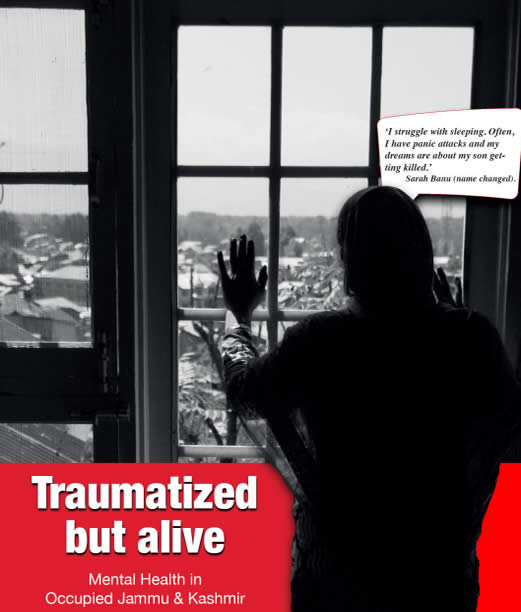
The militarized environment in IoK produces sustained psychological damage among children. The constant presence of armed forces, surveillance and coercive control creates fear as a daily condition. The state policies after August 5, 2019 intensified this environment through lockdowns, communication blackouts and expanded security operations. These measures disrupted childhood stability and increased mental stress.
The exposure to violence directly affects children’s mental health. The region has witnessed repeated cordon-and-search operations, detentions and killings in civilian areas. Children witness arrests of family members, night raids and armed encounters in residential neighborhoods. This exposure produces trauma responses at an early age. Clinical observations from psychiatric institutions in Srinagar show rising cases of anxiety and stress disorders among minors after 2019.

Medical data support the prevalence of psychiatric illness. A study conducted at Government Medical College Srinagar identified multiple disorders among conflict-affected youth. The findings showed 25.79% major depressive disorder, 15.79% adjustment disorder, 12.11% panic disorder and 9.21% PTSD among examined cases. These figures confirm that mental illness among children is widespread and directly linked to conflict exposure.
]The impact extends to behavioral and developmental disorders. Reports identify increasing cases of generalized anxiety disorder, OCD, ADHD and phobias among children in conflict zones. These conditions affect concentration, memory and emotional regulation. Children struggle to participate in education and social interaction. The environment of fear alters normal cognitive development.
The COVID-19 lockdown in 2020 deepened psychological stress. A study conducted by Child Rights and You (CRY) based on responses from 387 households in Jammu and Kashmir reported severe disruptions. The study found that 35% of children did not receive medical help during lockdown, which increased parental anxiety and child distress. The same study showed that 77.14% of children under 5 missed basic healthcare services, such as immunizations. This situation created fear regarding illness and survival. Children lived in confined conditions with uncertainty and limited support.
The lockdown also increased isolation and digital exposure. The CRY study reported that almost 90% of parents observed increased screen time among children, while only 41% of households across the country could access online education regularly. In Jammu and Kashmir, connectivity restrictions after 2019 further limited access. This isolation reduced social interaction and increased psychological strain.
The lack of structured psychosocial support systems intensifies the crisis. The healthcare framework does not provide adequate child mental health services. Schools do not have counseling systems to address trauma. Community-level mental health programs remain limited. Children experiencing anxiety, depression and trauma do not receive professional support.
The intergenerational nature of trauma worsens the condition. Children grow up in households affected by conflict, economic stress and insecurity. Parents experiencing stress transfer anxiety to children. This creates normalization of fear and instability. Children accept violence and uncertainty as part of daily life.
The evidence shows that militarization and governance policies create a continuous psychological crisis. Children do not experience isolated events. They live in an environment where fear, uncertainty and trauma shape their development. The absence of support systems ensures that these conditions persist and expand.
i. Healthcare Inaccessibility & Rehabilitation Gaps
The healthcare system in IoK fails to meet the needs of children due to policy neglect and administrative breakdown. The militarized context restricts access, disrupts services and weakens infrastructure. Children in rural and conflict-affected areas face the highest barriers.
The disruption of basic healthcare services became visible during the 2020 lockdown. The CRY study confirmed that 77.14% of children aged 0–5 years could not access immunization services. This figure shows a collapse in routine healthcare delivery. Immunization protects children from diseases such as diphtheria, polio and pneumonia. The failure to provide vaccines exposes children to preventable illnesses.
The gaps continued in recent years. In May 2025, Pulwama district faced a severe shortage of essential vaccines. Reports confirmed unavailability of Pentavalent (Penta), Inactivated Polio Vaccine (IPV), Rotavirus Vaccine (RVV) and Pneumococcal Conjugate Vaccine (PCV) at multiple centers. Health workers reported that the shortage persisted for two months, forcing.

parents to return without vaccinating their children. These vaccines protect against diseases such as hepatitis B, polio and pneumonia. The disruption increases risk of outbreaks among infants.
The administrative response shows reactive governance. Parents appealed to Deputy Commissioner Basharat Qayoom and MLA Waheed Para for intervention. Officials acknowledged the shortage and promised replenishment. This response indicates that supply chains remain unstable. Children depend on uncertain delivery systems for essential healthcare.
The financial crisis in the healthcare sector further limits access. In April 2026, private hospitals in IoK reported ₹275 crore in pending dues under the Ayushman Bharat PMJAY scheme. The Association of Private Hospitals representing 135 facilities warned of service suspension due to unpaid claims. Reports indicated that dues reached nearly ₹300 crore, with some payments pending since 2021. Hospitals faced shortages of medicines and equipment due to unpaid bills.
The decision to suspend services directly affects children. Thousands depend on the Sehat Scheme for free treatment, including surgeries and critical care. The potential halt of services from April 15, 2026 threatens access for economically vulnerable families. Children requiring hospitalization, dialysis, or emergency care face interruption in treatment.
The rural healthcare gap remains severe. Many conflict-affected districts lack specialized pediatric care. Children must travel long distances to reach hospitals in Srinagar or Jammu. Delays in treatment worsen health outcomes. The absence of trauma care facilities in remote areas increases mortality and long-term complications.
The rehabilitation system for disabled children remains inadequate. The region lacks sufficient centers for prosthetics, physiotherapy and long-term recovery. Children who suffer injuries or chronic illness do not receive sustained care. This limits their mobility and integration into education systems.
The mental health infrastructure also remains weak. Psychiatric services are concentrated in urban centers. Rural areas lack trained professionals. Children suffering from anxiety, depression, or trauma do not receive counseling. This gap converts temporary stress into long-term psychological disorders.
The economic burden on families intensifies healthcare inaccessibility. High treatment costs force families to delay or abandon care. The lack of consistent government support increases dependency on private facilities, which are now under financial strain due to unpaid dues. This cycle reduces access for children from low-income households.
The evidence shows that governance failures and militarization create barriers at every level of healthcare. Basic services such as immunization face disruption. Hospitals struggle due to financial mismanagement. Rehabilitation systems remain underdeveloped. Children face delayed treatment, incomplete care and long-term health risks.
i. Collapse of Pediatric Cancer Survival Due to Diagnostic and Health System Failure
The survival data on pediatric cancer in IoK exposes a severe health system failure affecting children at the most critical stage of life. A peer-reviewed study published in the Indian Journal of Medical and Pediatric Oncology (2025) reports that only one in three children with cancer survives, while 21% of pediatric patients die and 35.6% discontinue treatment before completion. The study, based on over 300 children with solid tumors at Soura Medical Complex in Srinagar, shows that late diagnosis dominates outcomes and directly reduces survival chances.
The findings confirm that advanced-stage detection remains the most common pattern among pediatric cancer cases in the region, which severely limits treatment success. The study also notes that nearly 5% of all registered cancer patients at the facility are children, while a large proportion of cases present in adolescence due to delayed identification of symptoms. The absence of early screening systems means children enter treatment at stages where remission becomes difficult.
The researchers identify multiple systemic failures driving this outcome. The lack of diagnostic infrastructure across district-level hospitals forces families to rely on limited tertiary centers such as Srinagar, delaying timely intervention. Financial barriers further restrict access, as many diagnostic procedures require out-of-pocket expenditure, which pushes families to delay or avoid early testing.
The study also records that 55% of pediatric cases involve adolescents aged 12–19, a deviation from global patterns where younger age groups dominate early detection. This shift reflects delayed recognition of symptoms and weak primary healthcare response mechanisms.
The consequences of this delay are measurable in survival outcomes. Only 34% of children achieve remission, while a significant proportion abandon treatment due to financial and logistical constraints. The discontinuation rate of 35.6% reflects systemic inability to ensure treatment continuity, while the 21% mortality rate reflects late-stage intervention failures.
Medical experts involved in the study confirm that lack of awareness, misinterpretation of early symptoms and dependence on alternative treatments contribute to late diagnosis. Prof. Nisar A Butt from Soura Medical Complex emphasizes that delayed medical consultation and inadequate early screening significantly reduce survival probability.
The evidence demonstrates that child health outcomes in the region are shaped not only by disease burden but by structural failures in healthcare delivery. The absence of early detection systems, financial barriers and weak referral mechanisms collectively determine whether a child survives cancer or not.
The data confirms a critical conclusion: pediatric cancer in the region does not remain a purely medical challenge but becomes a systemic failure of timely diagnosis and accessible treatment.
ii. Nutritional Deprivation
The health data from 2025–2026 exposes a severe nutritional crisis affecting children in IoK. The official “Children in India 2025” report by the Ministry of Statistics and Programme Implementation records that 72.7% of children under five in the region suffer from anaemia. The same dataset shows that anaemia affects 73.9% of males and 71.4% of females, with rural prevalence reaching 73.5% compared to 70.1% in urban areas.
This level of anaemia places the region among the highest affected areas in India and reflects a direct failure in child health protection systems. Medical experts attribute the condition to iron deficiency, inadequate dietary intake and poor feeding practices after six months of age. Dr. Shabeena Shah, a child specialist, identifies iron deficiency anaemia as the dominant cause affecting toddlers and young children, linking it to low consumption of iron-rich foods and reliance on grain-heavy diets.
The impact of this health crisis extends beyond physical weakness. The condition affects growth, immunity and cognitive development, leading to fatigue, delayed physical growth and impaired brain development during critical developmental years. The children affected are entering school age with reduced physical capacity and lower learning readiness, which compounds long-term inequality.
The rural-urban gap in prevalence demonstrates deeper structural deprivation. The higher rate of 73.5% in rural areas reflects limited access to nutritional diversity and healthcare monitoring. The persistence of such high rates indicates weak implementation of child health and nutrition programs at the ground level.
The absence of effective monitoring systems and delayed intervention mechanisms worsens the situation. Health experts point to insufficient awareness campaigns and limited resource allocation as key drivers of the crisis. The continued rise in anaemia cases shows that existing health frameworks are not reaching the most vulnerable children.
The result is a generation of children growing up under conditions where basic nutritional needs remain unmet. The data demonstrates that child health in the region is not only a medical concern but a systemic failure affecting physical development, educational capacity and long-term human development outcomes.
INSTITUTIONAL COLLAPSE AND POLICY-INDUCED EDUCATIONAL BREAKDOWN
The education system in Jammu and Kashmir is facing a policy-driven collapse that intensified after 5 August 2019. The government froze recruitment of teachers in 2019 and the impact became fully visible by 2025. The system is operating with 4,200 vacant lecturer posts, while thousands of lower-level teaching positions remain unfilled. Schools are functioning without adequate staff. In 1,371 schools, only one teacher is handling 32,303 students, covering multiple grades at once.

The state has failed to build professional capacity. Only 22.3 percent of pre-primary teachers are trained and the region ranks among the highest in untrained teaching staff at upper primary levels. The system is producing classrooms without qualified educators.
The infrastructure deficit is equally severe. In 2025, at least 1,900 schools lacked separate toilets for girls and 8.5 percent had no electricity. More than 50 percent of school libraries had no books, while only 373 schools out of 24,296 had digital library access. This means over 98 percent of institutions lack digital learning systems. The state is not only failing to modernize education. It is failing to maintain basic learning conditions.
The governance structure shows clear inefficiency. The Ministry of Education reported that only 55.38 percent of allocated funds were used in 2024–25 and total utilization over five years remained at 69.9 percent. This underutilization exists alongside shortages, proving that the crisis is administrative, not financial.
The system is also losing public trust. Government schools constitute 77.32 percent of total institutions, yet they enroll only 54.06 percent of students. At least 146 schools have zero enrolment and 61 teachers remain posted in empty schools. Authorities have already shut down or merged around 4,400 schools, reducing primary schools from 12,977 to 8,966. These closures increase travel distances and reduce access, especially in conflict-affected and rural areas.
The militarized environment continues to disrupt schooling. In the 2024–25 academic year, schools recorded less than 150 working days, far below the required 180–220 days. Frequent restrictions, security operations and instability directly reduce classroom time and learning continuity. The system is structurally weakened at every level.
i. Learning Collapse, Dropouts and Shrinking Academic Continuity
The institutional failure has translated into a measurable collapse in learning outcomes. Data from 2024–2025 shows that children are not acquiring basic skills even after years of schooling.
Only 21.8 percent of Grade 5 students in government schools can read a Grade 2-level text, while 60.3 percent of private school students can do the same. This gap reflects a deep failure in foundational literacy. Mathematics outcomes show similar decline. Only 16.3 percent of Grade 5 students in government schools can solve basic division problems.
The crisis worsens at higher levels. Less than 50 percent of middle school students can read basic texts and more than 70 percent cannot perform division tasks. Learning outcomes have declined over time. Reading ability dropped from 55.5 percent in 2018 to 47.2 percent in 2024, showing that recovery after COVID and post-2019 disruptions has failed.
The system is unable to retain students. In 2024–25, the dropout rate at secondary level reached 12.9 percent, exceeding the national average of 11.5 percent. The transition rate from secondary to higher secondary is only 72.9 percent, meaning more than one in four students leaves education after Class 10.
The financial dimension of education also plays a role in shaping enrolment outcomes. For many families, the indirect cost of education—transportation, private coaching, digital access and opportunity cost of lost wages—can range between $250 to $900 per student annually, a significant burden in low-income households. At least 17 percent of students engage in family work after Grade 10, which forces early exit from education.
Digital inequality further weakens learning continuity. Only 41 percent of households could access online education during COVID disruptions. In 2024, although 79.4 percent of adolescents used smartphones, only 64 percent used them for educational purposes, showing absence of structured digital learning systems.
The crisis extends into higher education. In 2026, at least 13 colleges had fewer than 30 students, five colleges had fewer than 20 and 24 colleges had fewer than 100 students. This reflects a shrinking pipeline from schools to universities. The decline is driven by both high dropout rates and demographic change, with total fertility falling from 3.6 in 1990–91 to 1.4 in 2019–21. Fewer students are entering the system and even fewer are completing it.
The gap between aspiration and capacity continues to widen. Students aim for professional careers but the system fails to provide basic literacy and numeracy. This creates disengagement and long-term educational exclusion.'
ii. Adolescent Girls Dropout Crisis and Gendered Educational Exclusion
The education crisis is more severe for adolescent girls. Data presented in the Lok Sabha on March 16, 2026 confirms that dropout rates among girls remain a critical concern at upper primary and secondary levels.
The dropout rate for girls in classes 6–8 declined slightly from 4.1 percent in 2020–21 to 3.2 percent in 2024–25. This shows limited improvement at lower levels. However, the situation sharply deteriorates at the secondary stage. The dropout rate increased from 4.6 percent in 2020–21 to 12.6 percent in 2023–24, before marginally declining to 12.2 percent in 2024–25.
This means that a significant proportion of girls leave education during the transition from middle to secondary school. The secondary-level dropout rate for girls in Jammu and Kashmir remains higher than the national average of 9.6 percent in 2024–25, indicating a region-specific structural problem.
The causes are directly linked to governance and access failures. School closures and mergers after 2019 have increased travel distances. At least 1,900 schools lack separate toilets for girls, which directly affects attendance and retention. Safety concerns, transport barriers and absence of basic facilities discourage continuation beyond primary levels.
Economic pressure also plays a decisive role. Families prioritize limited resources and often withdraw girls from education at secondary stages. The data showing 17 percent of students engaging in family work after Grade 10 reflects this broader economic constraint.
This gendered dropout pattern is also linked to wider vulnerability factors in the region, including household income instability often below $300–$700 monthly, limited access to safe transport and inadequate school infrastructure in rural and semi-urban areas. These constraints disproportionately affect girls, reinforcing early withdrawal from education.
The presence of 215,000 orphans in Jammu and Kashmir further intensifies vulnerability among girls. Studies between 2015 and 2025 document high levels of depression, anxiety, PTSD and social phobia among orphaned children. These conditions reduce educational participation and increase dropout risks, particularly for girls who lack family support structures.
The pattern is clear. The system is unable to retain girls at the stage where education becomes most critical for long-term empowerment. The combination of infrastructural gaps, economic pressure and policy failures is pushing adolescent girls out of education at scale.
The education system is not only collapsing structurally. It is also deepening gender inequality by failing to protect the educational continuity of girls.
MISSING CHILDREN AND TRAFFICKING RISKS
i. Escalating Pattern of Missing Minor Girls and Unresolved Cases
This region reports a continuous rise in missing minor girls that reflects a widening protection failure inside civilian life under prolonged militarised governance. The official data placed before the Lok Sabha confirms 509 minor girls reported missing in Jammu and Kashmir till 2023. It records that 209 were traced while 300 remained untraced, showing that more than half of the cases remain unresolved.
This trend does not emerge as an isolated spike. It shows a persistent yearly escalation. The recorded cases show 355 missing girls in 2019, 350 in 2020, 443 in 2021, 502 in 2022 and 509 in 2023. The direction of these figures shows steady accumulation of unresolved cases across five consecutive years without systemic closure.
This pattern demonstrates that tracing mechanisms fail to match the scale of disappearances. The administrative response produces partial recoveries but leaves a consistent backlog of children who remain outside institutional protection. It shows that 300 children still untraced in 2023 alone represent not only missing persons but also unresolved vulnerabilities inside the protection system.
The enforcement framework operates through FIR registration, TrackChild portal, Khoya-Paya platform, CCTNS integration and Mission Vatsalya coordination. These mechanisms remain present on paper and policy documents, yet outcomes show limited operational effectiveness. The government presumption of abduction or trafficking in all missing child cases under SOPs does not translate into proportional recovery rates on the ground.
This gap exposes a structural failure between reporting systems and field-level enforcement. It also shows that digital tracking tools remain dependent on fragmented policing structures in districts where security priorities dominate administrative bandwidth. The militarised environment in Jammu and Kashmir also shapes child vulnerability patterns.The region operates under layered security deployment where civilian mobility and surveillance .practices intersect with everyday governance.
This environment creates conditions where missing persons cases often receive delayed investigative focus due to competing security priorities.International frameworks such as the UN Palermo Protocol (2000) and CEDAW Article 6 (1979) require states to prevent trafficking and ensure active protection mechanisms. However, persistent unresolved cases indicate that compliance remains procedural rather than outcome driven.
i. Trafficking Risk Environment and Institutional Accountability Gaps
This protection crisis extends beyond missing reports and enters a broader risk environment where trafficking and exploitation become persistent threats. The unresolved status of 300 missing minor girls in 2023 creates conditions where vulnerability does not end with disappearance but continues through absence of accountability.
This environment does not operate in isolation from historical and institutional precedents. The 2006 Jammu and Kashmir sex scandal exposed structured exploitation involving minors, where victims as young as 15 were reportedly coerced into sexual exploitation networks involving individuals within law enforcement and administrative systems. The case identified 56 suspects, yet prosecution outcomes remained limited and accountability remained incomplete. This historical record continues to shape public distrust in protection institutions.
The post-2019 security environment further intensified state control mechanisms across the region. The lockdown period following constitutional changes introduced extended communication restrictions, curfews and mobility controls. This governance environment reduced external monitoring capacity by independent observers and restricted civil society documentation of child protection cases. It also centralised administrative control over reporting and investigation channels.
In such conditions, trafficking risk does not emerge only from non-state actors. It also interacts with institutional weaknesses in oversight, delayed investigation cycles and fragmented accountability systems across districts. The presence of multiple enforcement agencies without unified child protection command structure creates gaps in response coordination.
Official systems such as the Child Helpline 1098, Emergency Response Support System 112 and Anti-Human Trafficking Units exist across districts. However, field-level reporting indicates uneven responsiveness due to resource constraints, overlapping jurisdictional responsibilities and prioritisation of security-related duties over welfare-driven investigations.
The Crime Multi Agency Centre (Cri-MAC) and CCTNS integration aim to ensure real-time data sharing across agencies. Yet unresolved cases demonstrate that data flow does not automatically translate into recovery action. This shows that digital infrastructure without enforcement consistency cannot resolve ground-level protection failures.
The legal framework under the Bharatiya Nyaya Sanhita 2023 strengthens punishment provisions for crimes against children. However, enforcement effectiveness depends on investigation speed, witness protection and inter-agency coordination, which remain inconsistent in conflict-sensitive zones.
This combination of historical trafficking exposure, militarised governance and fragmented enforcement creates a layered risk environment. It increases the probability that missing children cases transition into long-term untraced categories without closure.
ii. Adolescent Vulnerability, Systemic Protection Failure and Orphaned Risk Exposure
This crisis deepens when placed alongside the broader child vulnerability landscape in Jammu and Kashmir, where institutional care gaps and social disruption increase exposure to trafficking risks. The region reports approximately 215,000 orphans, many of whom experience disrupted family structures, unstable schooling and limited protective supervision. This population overlaps significantly with children exposed to missing and untraced case categories.
This vulnerability intersects with education disruption and adolescent dropout patterns, particularly among girls entering secondary school stages. School disengagement reduces protective institutional contact points and increases exposure to external exploitation networks. In such conditions, missing incidents do not occur in isolation but emerge from weakening social safety nets.
This environment also reflects uneven implementation of child protection systems across districts. Rural and semi-urban areas experience delayed registration of cases, limited investigative reach and weaker coordination between police units and welfare departments. This creates geographic disparities in recovery outcomes, where some districts report faster tracing while others accumulate unresolved cases.
The persistence of 300 untraced girls out of 509 reported cases in 2023 demonstrates that recovery mechanisms do not operate at scale required to match missing case inflows. It shows that every annual cycle adds new unresolved cases while previous cases remain open, creating a compounding backlog.
It also indicates that child protection frameworks function more effectively in administrative reporting than in operational recovery. The presence of SOPs mandating FIR registration and presumption of abduction does not ensure uniform investigative urgency across districts.
This system imbalance becomes more severe in a conflict-affected governance environment where security operations, administrative surveillance and civilian oversight intersect. In such conditions, child protection does not operate as a standalone priority but competes with broader security frameworks that dominate institutional attention.
International obligations under CEDAW Article 6 and the UN Palermo Protocol require active prevention, prosecution and protection mechanisms against trafficking networks. However, the persistence of unresolved missing cases and historical exploitation incidents demonstrates that compliance remains incomplete in practical terms.
This gap between legal obligation and field outcome defines the child protection crisis in Jammu and Kashmir. It shows that missing children cases are not only administrative failures but also

ECONOMIC HARDSHIP AND CHILD LABOR PRESSURES
i. Militarised Economy and Forced Entry of Children into Labour Systems
This region exposes a direct link between prolonged militarised governance structures and the economic pressures that push children into labour. This environment restricts stable livelihood generation in multiple districts and produces household income disruption that forces children into early work participation. This pattern becomes visible across construction corridors, transport routes, agricultural belts and informal trade zones.
This context shows that child labour does not emerge as an isolated social deviation. It develops inside constrained economic ecosystems where families lose consistent income opportunities. It also expands in areas where security presence and administrative restrictions reduce private investment and limit job creation in civilian sectors.
This region records persistent child labour involvement despite formal prohibition under national legal frameworks. Official labour assessments indicate that Jammu and Kashmir holds a projected child labour population of 64,260 children aged 5–14 by 2025, placing it among the higher-risk regions in national rankings. Earlier projections placed the territory at third position in child labour prevalence in India, indicating a sustained structural burden rather than a temporary trend.
This system shows children engaged in multiple hazardous labour environments. This includes automobile workshops in Srinagar, construction sites in Jammu, roadside dhabas along national highways and agricultural labour in apple-producing districts such as Shopian, Pulwama and Baramulla. This pattern shows children carrying physical workloads that exceed their age capacity due to household income deficits.
This region also reflects heavy reliance on informal labour sectors where wage insecurity dominates. Daily earnings in informal sectors range between $3 and $8 per day, which remains insufficient to sustain basic household consumption in families with multiple dependents. This wage gap compels households to deploy children as additional income contributors.
This situation strengthens when schooling continuity weakens due to economic stress. This region records dropout escalation at secondary levels, which directly increases child labour entry points. This transition occurs when families evaluate education as a cost burden rather than a long-term investment under financial strain.
This environment shows that militarized administrative frameworks combined with limited economic diversification restrict household resilience. This restriction increases dependency on informal labour and accelerates child participation in income-generating activities.
Orphans, Disability Burdens and Survival Labour Economy
This region shows intensified child labour exposure among orphans and vulnerable children who lack stable household protection structures. This population faces direct economic displacement due to absence of parental income, forcing early workforce entry for survival.
This region estimates approximately 215,000 orphaned children, many of whom operate without consistent financial guardianship. This demographic faces immediate pressure to generate income through informal work sectors including domestic labour, roadside vending, agricultural assistance and small-scale transport support activities.
This condition worsens when conflict-related injuries or disability cases affect household earners. This region records multiple cases where family members suffer permanent or temporary disability due to pellet injuries, occupational accidents and conflict-related trauma. This condition reduces households' income capacity and forces dependent children to participate in labour.
This situation creates a survival-driven labour economy where children replace adult income earners. This replacement occurs in both rural and urban settings, where households shift children into wage activities to compensate for lost earnings. This shift reduces educational continuity and increases long-term vulnerability.
This region also shows that medical expenditure intensifies economic pressure on households. Families affected by injury or disability spend between $400 and $1,200 annually on treatment, medication and rehabilitation support. This financial burden pushes households into debt cycles and compels child labour participation as a coping mechanism.
This condition is directly linked to reduced institutional support for vulnerable families. This region shows limited access to structured welfare compensation for all affected households, which increases reliance on informal income strategies involving children.
This environment demonstrates that child labour operates as a survival mechanism rather than choice. This survival mechanism expands under conditions of economic disruption, weakened household structure and limited welfare absorption capacity.
ii. Education Disruption and Labour Transition Among Adolescents
This region shows that economic hardship directly interrupts educational continuity and accelerates transition into labour markets. This disruption becomes visible at secondary education stages where financial pressure intersects with household survival needs.
This region records a 72.9% transition rate from secondary to higher secondary education, indicating that more than one in four students exits formal education after Class 10. This exit group becomes highly exposed to informal labour markets where entry barriers remain low and immediate income becomes the priority.
This situation becomes more severe among adolescent girls and boys in low-income households where schooling costs compete with daily survival expenses. This includes transportation costs, uniform expenses and private tutoring fees that collectively range between $250 and $900 annually per student, creating financial exclusion from sustained education.
This region also shows that school disengagement leads to early labour recruitment in local markets. Adolescents enter carpentry units, retail shops, agricultural labour fields and small transport services where daily wage structures offer immediate income but no long-term security.
This condition also links with weak vocational transition systems. This region shows limited integration between secondary education and skill-based employment pathways. This gap forces adolescents to abandon education entirely rather than transition into structured skill development programmes.
This environment shows that economic hardship does not only create child labour but also reshapes educational decisions inside households. Families prioritize short-term survival over long-term academic investment under financial pressure.
This region demonstrates that militarised administrative conditions combined with economic instability reduce institutional capacity to retain children in education systems. This reduction increases labour absorption of adolescents and expands informal workforce dependency.
This trajectory confirms that child labour in Jammu and Kashmir emerges from intersecting pressures of income loss, orphan vulnerability, disability burden and educational disruption.
COLLAPSE OF PLAYGROUNDS AND PUBLIC PARKS: DENIAL OF SAFE CHILDHOOD SPACES
The playground crisis in IoK shows a direct failure to provide safe and functional spaces for children. The official data released on 29 March 2026 confirms that 10,896 schools across the Union Territory do not have playgrounds. The figure comes from a total of 18,724 schools, which means more than half of all institutions lack any space for physical activity. The absence of playgrounds removes a basic component of childhood development. The children grow up without access to structured play, sports, or physical engagement.
The policy framework acknowledges the importance of sports. The National Education Policy 2020 classifies sports as part of the curriculum. The ground reality contradicts this policy. The authorities have admitted that the “majority of public schools” do not have playground facilities. The response from officials suggests tagging schools without playgrounds to nearby institutions. This approach ignores the lived reality in conflict zones where movement between areas is restricted. The children cannot safely travel to other locations due to checkpoints, surveillance and unpredictable security conditions.
The absence of playgrounds directly impacts physical health. The children lack space to run, exercise, or engage in basic activities. The lack of movement contributes to long-term health risks. The absence of play also affects cognitive and emotional development. The children lose opportunities to build social skills, teamwork and confidence. The denial of playgrounds therefore creates a multi-layered impact that goes beyond physical inactivity.
The condition of public parks in Srinagar further exposes institutional neglect. The Children’s Park near LD Hospital, Joggers Park in Rajbagh and Dahlia Park opposite Municipal Park remain in a state of disrepair. The reports confirm broken swings, missing play equipment and damaged structures across these locations. The infrastructure that exists is not functional. The children enter these spaces and face direct safety risks.
The physical condition of the equipment raises serious concerns. The broken swings and cracked slides contain sharp edges that can cause injuries. The parents have reported near accidents involving children using damaged structures. A resident, Javaid Ahmad, described the situation clearly. He stated that children visited the park with excitement but found everything unsafe. Another parent, Rafiqa Begum, reported that slides contain cracks and splinters that can seriously harm a child. These accounts show that authorities are aware of the risks but have failed to act.
The sanitation conditions in these parks worsen the situation. The reports confirm garbage scattered across play areas. The overgrown grass and lack of maintenance make these spaces unusable. The children cannot safely sit, run, or play in such environments. The neglect transforms public parks into hazardous zones rather than safe recreational spaces.
The responsibility for maintenance lies with the Floriculture Department, yet repeated complaints have not resulted in repairs. The residents have raised these issues multiple times. The authorities have not taken corrective measures. The lack of response shows a breakdown in accountability. The failure to maintain existing parks indicates that child welfare is not treated as a priority.
The urban density in Srinagar increases the importance of these parks. The families living in crowded areas rely on public spaces for children’s recreation. The absence of safe parks leaves children confined to narrow streets or indoor spaces. The restricted environment limits physical activity and increases isolation. The children lose access to spaces that support social interaction and emotional well-being.
The situation becomes more severe during lockdowns and security restrictions. The frequent lockdowns imposed in the region limit movement even further. The children cannot travel to distant locations or access alternative spaces. The lack of playgrounds and the collapse of parks leave them with no outlet for recreation. The confinement affects mental health and increases stress levels among children.
The governance response focuses on policy announcements rather than implementation. The authorities continue to speak about sports integration and infrastructure development. The ground conditions remain unchanged. The absence of functional playgrounds and safe parks reflects a deeper governance failure. The policies exist but do not translate into action.
The militarized environment adds another layer to this crisis. The public spaces that should serve children operate under constant surveillance and security presence. The families avoid certain areas due to fear of incidents. The children grow up in spaces where play is restricted and monitored. The absence of safe and free recreational environments shapes their daily lives.
DISPLACEMENT, INSECURITY AND LOSS OF HABITAT UNDER MILITARISED GOVERNANCE
This region continues to witness displacement that emerges from sustained militarised governance structures and conflict-linked administrative practices. These conditions create forced mobility for families in border and rural belts. These families leave ancestral land in Kupwara, Baramulla, Rajouri, Poonch and Bandipora after repeated exposure to insecurity and landmine contamination zones along the Line of Control. These movements disrupt childhood stability and fracture access to schools and basic community services.
These border districts report long-term landmine presence that restricts habitation and agricultural use of land. These zones remain marked by security fencing, restricted entry corridors and patrol-based control systems. These conditions reduce safe residential space for children and push families into clustered relocation areas. This relocation weakens traditional village schooling networks that once supported early education continuity.
These displacement patterns link directly with conflict-related infrastructure expansion. These include roadblocks, checkpoints and security installations positioned across civilian movement corridors. These installations reshape settlement patterns and force families to abandon land that no longer remains safe for farming or housing. These changes reduce household income from agriculture and directly affect school retention.
This displacement intensifies after large-scale security operations and post-incident lockdowns. These restrictions interrupt daily economic activity in villages and create sudden mobility pressure for families already living on subsistence income. These families often migrate toward district towns such as Srinagar, Jammu, Baramulla and Anantnag in search of temporary safety and livelihood access.
This migration weakens community-based childhood support systems. These systems once provided informal childcare, peer learning and cultural continuity. These disruptions reduce emotional stability among children and increase school absenteeism. These patterns also increase dropout risk in secondary education where continuity becomes essential for academic progression.
This instability also connects with documented population vulnerability in Jammu and Kashmir. These vulnerabilities include around 215000 orphaned children as reported in conflict-linked demographic assessments. These children face higher exposure to economic insecurity and housing instability that emerges from absence of stable guardianship structures.
This displacement crisis also intersects with administrative uncertainty in rehabilitation frameworks. These frameworks often fail to provide consistent long-term settlement security for affected families. These gaps produce recurring relocation cycles that prevent children from establishing stable educational pathways.
RESTRICTED MOBILITY AND MILITARISED LIVING ENVIRONMENT
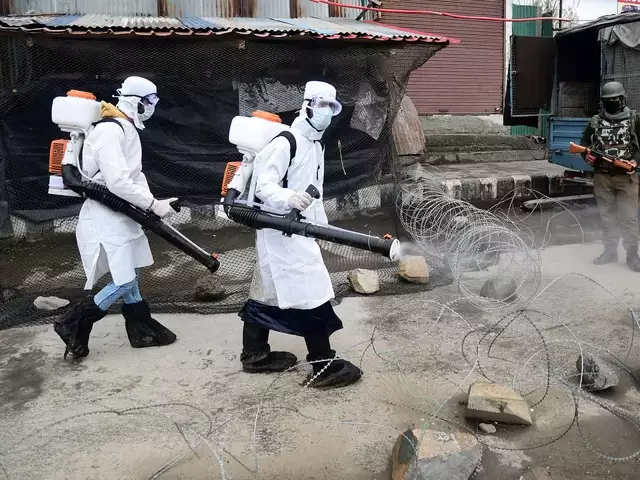
This region operates under a highly militarised civilian environment that directly shapes childhood movement and access to education. These conditions emerge from dense deployment of security personnel across urban and rural areas including Srinagar, Pulwama, Shopian, Kupwara and Anantnag. These deployments create layered checkpoints that regulate daily movement for students and families.
These checkpoints restrict access to schools located across villages and town peripheries. These restrictions increase travel time for children and create fear-based avoidance of certain routes. These patterns become more severe in areas near the Line of Control where security protocols remain intensified due to perceived risk zones.
This environment increases psychological pressure on children who travel daily through monitored spaces. These children experience constant surveillance presence that shapes behavioural restrictions in public spaces. These restrictions reduce participation in outdoor learning, sports activities and peer interaction.
This militarised environment also limits access to playgrounds and open public spaces. These restrictions reduce opportunities for physical development and social learning among children. These conditions particularly affect school-going children in districts with dense security installations such as Srinagar outskirts, Pulwama belt and Baramulla corridors.
This mobility restriction directly affects school attendance during security operations and curfew-like conditions. These conditions interrupt academic calendars and reduce classroom continuity. These interruptions weaken learning outcomes and increase dropout risk at secondary levels where academic pressure increases.
This environment also intersects with landmine risk zones in border districts. These zones restrict safe movement for children in areas such as Poonch, Rajouri, Kupwara and parts of Bandipora. These restrictions prevent children from accessing nearby schools located across fragmented rural terrain.
This militarised structure also affects girls disproportionately in upper primary and secondary education. These restrictions combine with household safety concerns to limit independent mobility for adolescent girls. These conditions align with reported secondary-level dropout rates of 12.2 percent in Jammu and Kashmir in 2024 to 2025 as recorded in UDISE+ data. These rates exceed the national average of 9.6 percent for the same period.
This environment also shapes household decision-making on schooling. These households prioritise immediate safety over long-distance education access. These decisions increase reliance on informal or home-based learning structures that lack academic certification pathways.
This restricted mobility environment also interacts with economic vulnerability. These families facing income loss due to militarised disruption often withdraw children from school for domestic or labour support. These decisions intensify long-term educational discontinuity.
FORCED DEPORTATION OF MOTHERS AND SEPARATION OF CHILDREN
The April 2025 security escalation after the Pahalgam attack on 22 April 2025 triggered large-scale deportation orders against Pakistani-origin women in Jammu and Kashmir. Official

enforcement data and field reporting indicate at least 150 women received deportation notices in the immediate aftermath, while around 786 Pakistani nationals left or were removed across India during the same enforcement cycle. The policy shift followed suspension of visa regimes after the attack that killed 26 civilians in south Kashmir and immediately disrupted long-term family settlements.
The enforcement directly separated mothers from children in multiple border districts including Bandipora, Baramulla, Rajouri and Poonch. At least 20 families in Bandipora alone received notices within a single wave of action, affecting children who had lived with their mothers for 8 to 15 years under the 2010 rehabilitation framework. That framework had allowed return and amily reunification for former militants and their spouses but its operational stability collapsed after the 2025 security response.
The separation created immediate caregiving disruption for children under the age of 10 who depend fully on maternal care for daily routines, emotional stability and schooling support. Many of these children were born or raised in Kashmir and had no lived experience outside the region, which intensified adjustment shock when mothers were ordered to leave within 24 to 72 hours of notice.
The disruption extended into legal and identity contradictions because many deported women held domicile certificates, Aadhaar cards and voter registration documents issued in Jammu and Kashmir. This created a situation where children remained within legally recognized households while one primary caregiver was simultaneously removed under immigration enforcement measures.
The enforcement also disrupted education continuity in North Kashmir where children missed school attendance during late April and May 2025 due to sudden household breakdown. In at least three affected clusters, school-going children experienced immediate withdrawal of maternal supervision, affecting attendance routines and academic stability during active school terms.
The separation further intensified psychological stress among children who witnessed notice delivery and police verification procedures inside their homes. In Bandipora district, at least one documented case involved an 8-year-old child expressing fear of permanent separation from their mother during enforcement action, reflecting direct exposure of minors to administrative deportation processes.
The militarized environment in border districts amplified this impact because children already operate under restricted mobility conditions due to checkpoints and security presence in areas such as Poonch and Rajouri. Daily access to schools, playgrounds and transport routes remains constrained even in normal conditions and deportation enforcement further reduced mobility and caregiving continuity.
The estimated child impact of this enforcement ranges between 150 and 450 children, based on average household dependency structures of one to three children per deported woman. This shows that each deportation order extended far beyond an individual case and directly altered multiple child care units simultaneously across affected districts.
The separation also affected infants and toddlers who depend entirely on maternal care for survival routines such as feeding, sleep regulation and health monitoring. In several households in Bandipora, fathers or extended relatives assumed immediate caregiving roles without preparation or institutional support, creating sudden gaps in child welfare structures.
GOVERNANCE FAILURES AND INSTITUTIONAL GAPS AFFECTING CHILDREN
The governance system in conflict-affected regions of Jammu and Kashmir shows persistent gaps between policy design and ground-level implementation, particularly in child protection, education continuity and welfare delivery. Despite the presence of structured frameworks such as the Juvenile Justice Act 2015, Integrated Child Protection Scheme and multiple state-level welfare programs, institutional execution remains inconsistent across border and rural districts including Bandipora, Kupwara, Rajouri and Poonch. Administrative reports and field assessments repeatedly indicate staffing shortages in child protection units and weak monitoring capacity at district level, which reduces the ability of institutions to respond to child vulnerability in real time.
The education and welfare sectors demonstrate limited accountability mechanisms when children are exposed to displacement, conflict disruption, or economic distress. Government data from Jammu and Kashmir Economic Survey 2023–24 highlights persistent dropout pressures in rural and border districts, where school retention remains lower due to mobility restrictions, seasonal instability and security-related disruptions. Institutional systems fail to maintain continuous tracking of children affected by migration or family separation, which creates long-term invisibility of vulnerable child populations within official databases.
The child care and institutional protection system also suffers from inadequate monitoring structures. Social welfare inspections between 2022 and 2024 across Jammu and Kashmir indicate irregular auditing of orphanages and child care institutions, with some facilities operating without consistent evaluation for extended periods. The absence of standardized digital monitoring systems and real-time reporting mechanisms weakens accountability and increases risks of neglect, poor nutrition and lack of psychosocial support for children in institutional care.
The crisis response mechanism shows a clear disconnect between policy frameworks and field implementation during emergencies. Security-driven incidents, displacement episodes, or enforcement operations rarely activate coordinated child protection responses at district level. Administrative priorities often shift toward security management, leaving child welfare interventions secondary or delayed. This structural gap results in children relying on informal family arrangements rather than state-supported protection systems during crises.
LEGAL AND HUMAN RIGHTS VIOLATIONS AFFECTING CHILDREN
The legal environment in Jammu and Kashmir is shaped by a combination of constitutional protections, international obligations and special security legislation, yet implementation gaps create conditions where children remain exposed to rights violations. The Armed Forces Special Powers Act (AFSPA), enforced in the region since 1990, grants broad operational authority to security forces, including arrest without warrant and use of force in disturbed areas. Human rights organizations have consistently linked such frameworks to accountability deficits, which indirectly affect civilian populations including children living in conflict zones.
The international legal framework applicable to children includes India’s obligations under the Convention on the Rights of the Child (CRC), ratified in 1992, which guarantees protection from violence, access to education, healthcare and family unity. Article 38 of the CRC specifically requires states to ensure protection of children affected by armed conflict in line with international humanitarian law. However, implementation in conflict-affected regions often remains uneven due to enforcement limitations and institutional constraints.
The International Covenant on Civil and Political Rights (ICCPR) and International Covenant on Economic, Social and Cultural Rights (ICESCR) further obligate protection of children’s rights to life, education, liberty and adequate living conditions. Article 24 of the ICCPR mandates special protection for minors, yet procedural access to these protections remains limited in remote and militarized districts where legal aid infrastructure is weak.
Children in conflict-affected areas also face exposure to security operations, detention practices and movement restrictions. Field-level reporting from North Kashmir has documented repeated instances of cordon-and-search operations in civilian areas, where children experience sudden confinement, restricted mobility and exposure to armed presence in domestic spaces. These conditions directly affect psychological security and disrupt normal childhood development environments.
Legal redress mechanisms for children remain limited in accessibility and effectiveness. Although constitutional remedies exist under Articles 21 and 39(f) of the Indian Constitution, procedural complexity, geographic isolation and lack of child-friendly legal support systems reduce practical access to justice. District legal services authorities function with limited outreach capacity in rural and conflict-affected areas, delaying intervention in cases involving minors.
The absence of dedicated child grievance redress systems further deepens institutional gaps. Child Welfare Committees operate at district level under statutory mandate, yet their effectiveness varies significantly across regions due to staffing constraints, inconsistent reporting and delayed case resolution. This creates a gap between legal entitlement and actual protection delivery on the ground.
Together, governance weaknesses and legal enforcement gaps produce a system where children in conflict-affected regions experience partial protection in law but inconsistent protection in practice. Institutional fragility, weak accountability and limited legal access collectively expose children to prolonged vulnerability within militarized and crisis-prone environments.
References
Akshitha, Y. (2026, March 29). Over 10,000 schools lack playgrounds, 9,000 without boundary walls. The Indian Express.
https://indianexpress.com/article/education/jk-schools-infrastructure-data-2026
Ahmed, S. (2026, January 15). Public parks in Srinagar fall into disrepair. Greater Kashmir.
https://www.greaterkashmir.com/srinagar/parks-disrepair-safety-concerns
Bashir, Z. (2025, February 27). Only one among three children survives cancer in J&K: Study. Greater Kashmir.
https://www.greaterkashmir.com/health/only-one-among-three-children-survives-cancer
Bhat, A. (2024, August 9). Lack of recreational spaces affects urban children in Kashmir. Rising Kashmir.
https://risingkashmir.com/lack-of-playgrounds-kashmir
Bhat, I. (2024, December 10). IMHANS reports surge in child mental health cases. Greater Kashmir.
https://www.greaterkashmir.com/kashmir/imhans-child-mental-health-report
Bhat, R. (2026, April 5). Gujjar community raises concern over missing minors. Greater Kashmir.
https://www.greaterkashmir.com/kashmir/missing-minors-gujjar-community
Dey, S. (2019, October 4). 144 minors were detained, J&K administration tells Supreme Court. The Indian Express.
https://indianexpress.com/article/india/144-minors-were-detained-jk-admits-to-top-court-6046447/
Gupta, A. (2025, January 8). Tracking missing children remains a challenge in Kashmir. The Hindu.
https://www.thehindu.com/news/national/missing-children-kashmir
Gupta, N. (2025, April 30). Pakistani nationals deported after Pahalgam attack. The Indian Express.
https://indianexpress.com/article/india/pakistani-nationals-deported-pahalgam
Gupta, R. (2025, March 5). Rising pediatric cases overwhelm Kashmir hospitals. The Tribune.
https://www.tribuneindia.com/news/j-k/rising-pediatric-cases
Iyer, V. (2025, March 18). Legal challenges in protecting children in conflict zones. The Times of India.
https://timesofindia.indiatimes.com/india/child-rights-conflict-zones
Joseph, A. (2024, July 12). AFSPA and its impact on civilians in Kashmir. The Indian Express.
https://indianexpress.com/article/opinion/columns/afspa-impact-kashmir
Kaul, N. (2025, August 2). Psychological scars of conflict on Kashmiri children. The Hindu.
https://www.thehindu.com/opinion/psychological-impact-on-kashmir-children
Kaushik, H. (2025, January 26). Human rights concerns persist in Jammu and Kashmir. The Hindu.
https://www.thehindu.com/opinion/human-rights-kashmir
Khan, F. (2024, June 18). Security operations intensify in South Kashmir districts. Greater Kashmir.
https://www.greaterkashmir.com/kashmir/security-operations-intensify-in-south-kashmir
Khan, M. (2025, November 28). Broken play areas raise concerns for children’s safety. Kashmir Observer.
https://kashmirobserver.net/2025/11/28/broken-playgrounds-kashmir
Masoodi, A. (2025, September 14). Children in Kashmir face rising anxiety levels post-conflict escalation. The Indian Express.
https://indianexpress.com/article/india/kashmir-children-mental-health-crisis
Mehta, S. (2025, May 10). Children separated from mothers after visa cancellations. Hindustan Times.
https://www.hindustantimes.com/india-news/children-separated-kashmir
Mir, S. (2025, December 5). Low enrolment forces closure of hundreds of government schools in J&K. Greater Kashmir.
https://www.greaterkashmir.com/education/school-closures-jk
Pandit, B. (2025, May 3). Border tensions displace families in Rajouri and Poonch. The Hindu.
https://www.thehindu.com/news/national/displacement-rajouri-poonch
Pandit, M. A. (2021, March 12). Pellet victims in Kashmir: A continuing tragedy. The Times of India.
https://timesofindia.indiatimes.com/india/pellet-victims-in-kashmir-a-continuing-tragedy/articleshow/81432145.cms
Raina, T. (2024, September 3). Unemployment crisis impacts children in conflict regions. Hindustan Times.
https://www.hindustantimes.com/india-news/unemployment-kashmir-impact-children
Sharma, A. (2024, November 22). Healthcare gaps affect early diagnosis in Kashmir’s children. Hindustan Times.
https://www.hindustantimes.com/india-news/healthcare-gaps-in-kashmir
Sharma, D. (2024, December 18). Villagers flee amid cross-border shelling in J&K. Hindustan Times.
https://www.hindustantimes.com/india-news/shelling-displacement-jk
Sharma, P. (2024, July 19). Digital divide deepens education inequality in Kashmir. Hindustan Times.
https://www.hindustantimes.com/india-news/kashmir-digital-divide-education
Sharma, S. (2024, October 21). Hundreds of children reported missing in J&K: NCRB data. The Times of India.
https://timesofindia.indiatimes.com/india/missing-children-jk-ncrb-data
Singh, K. (2025, June 11). Children pushed into labour amid economic distress in Kashmir. The Tribune.
https://www.tribuneindia.com/news/j-k/child-labour-kashmir
Singh, R. (2025, May 2). Families torn apart after deportation orders in Kashmir. The Hindu.
https://www.thehindu.com/news/national/deportation-families-kashmir
Singh, V. (2020, January 13). Jammu and Kashmir lockdown: Children struggle with trauma and fear. The Hindu.
https://www.thehindu.com/news/national/other-states/jammu-and-kashmir-lockdown-children-trauma/article30532989.ece
Verma, P. (2025, April 20). Orphaned children face economic hardship in J&K. The Indian Express.
https://indianexpress.com/article/india/orphans-economic-crisis-jk
Related Reports