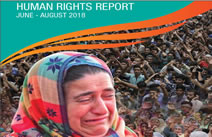
DIGITAL SEIGE AND ITS IMPACT
HISTORICAL BACKGROUND AND POST-2019 CONTEXT
The Kashmir dispute dates back to 1947, when India, under the cover of a controversial Instrument of Accession (IoA), deployed its military in the princely state of Jammu and Kashmir. The state, with a predominantly Muslim majority population, was ruled by a Hindu Maharaja who had largely lost the confidence of his subjects, the majority of whom had already risen in rebellion against his decades’ long autocratic role. The move triggered the first Indo–Pak war and eventually led to the unlawful occupation of nearly two-thirds of the
erstwhile princely state of Jammu and Kashmir by New Delhi. This effectively laid the foundation for a protracted political conflict, which remains both the cause and consequence of ongoing unrest and human rights violations in the region. It is to be noted that the part of Kashmir commonly referred to as “Jammu and Kashmir,” presently under Indian control, was subsequently granted special constitutional status under Article 370 of the Indian Constitution, along with additional safeguards under Article 35A, which provided limited autonomy and conferred special rights upon state subjects. Over time, however, this autonomy was progressively eroded through a series of legal and administrative measures.
However, a decisive shift—fundamentally altering the state’s nomenclature as well as its political and geographical landscape—came on 5 August 2019, when the Government of India unlawfully revoked Article 370 and bifurcated this UN-recognized disputed territory into two union territories. This was accompanied by a sweeping security lockdown, mass detentions, and a crippling siege and extensive communications blackout, including prolonged internet shutdowns. In the aftermath of the abrogation, Kashmir has been subjected to intensified surveillance, repeated communication blackouts, and expanded digital monitoring. Critics characterize this phase as a “digital siege,” where internet shutdowns and strict information controls have curtailed civil liberties, stifled media freedom, and disrupted everyday life, fundamentally reshaping the region’s socio-political landscape.
DIGITAL SIEGE: ITS IMPACT ON EDUCATION, HEALTHCARE AND ECONOMY
Following the abrogation of Article 370 on 5 August 2019, J&K–a UN recognised disputed territory presently under the India’s illegal occupation, experienced a near-total communications blackout (internet, mobile, and landlines) that initially lasted for months. The longest continuous internet shutdown is reported at 550 days, with intermittent restrictions and repeated shutdowns continuing into 2025–2026. India, according to available records, accounted for nearly half of all global internet shutdowns, with Kashmir experiencing the most frequent and prolonged disruptions reported ever in any “democratic” state. The Jammu Kashmir Coalition of Civil Society (JKCCS) report—Kashmir’s Internet Siege (August 2020)—described it as “digital apartheid” and collective punishment, violating rights to livelihood, health, education, and expression. The frequent internet shutdowns, often justified in the name of security, have disrupted nearly every facet of Kashmiri life, with devastating consequences for the economy, healthcare, and education—all of which form the backbone of society.
ECONOMY
After the promulgation of the so-called “Jammu and Kashmir Reorganisation Act” in August 2019, Jammu and Kashmir was subjected to a crippling siege and prolonged phase of communications blockade. This entailed repeated and extensive shutdowns and the suspension of essential communication networks, including internet services, mobile connectivity, and land-line telephone services, severely restricting access to information and
communication across the region.
The communication blockade extended far beyond the digital sphere; it affected core aspects of daily life, including education, healthcare delivery, governance, and economic activity. Ironically, this virtual siege of the Kashmir Valley, with its wide-ranging social and economic consequences, continued to unfold in the years that followed. The Kashmir Chamber of Commerce and Industry (KCCI)—a leading body representing the region’s business community, traders, and industrialists—estimated that the local economy incurred losses exceeding INR 40,000crore (approximately USD 5.3 billion).

EDUCATION
Following a nearly 14-month internet shutdown and the closure of all educational institutions, the education sector was severely disrupted. Students were left without access to classrooms, teachers, or digital learning platforms, effectively paralysing the system. This disruption came on top of decades of intermittent shutdowns and conflict related closures, which had already weakened educational continuity in the region. In 2019, however, the scale and duration of the communication blackout intensified the crisis, making it nearly impossible for students to access study materials, submit assignments, or participate in remote learning. As a result, learning losses deepened,dropout risks increased, and many families were compelled to seek education opportunities outside the region, often facing additional social and security challenges.
IMPACT
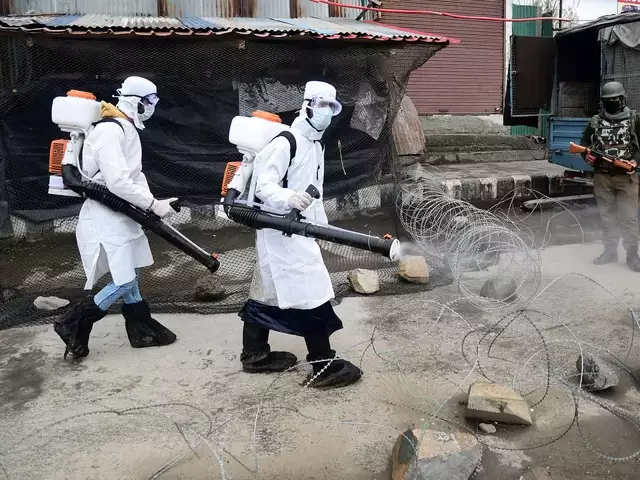
In IOJ&K, closure of educational institutions, for extended periods, have resulted in a near-complete halt to academic activities. The situation was further compounded by a double lockdown in Kashmir following the outbreak of the coronavirus pandemic in 2020, which overlapped with the existing communication restrictions and intensified disruptions to daily life, education, and economic activity. While educational institutions elsewhere transitioned to online learning during crises, students in Kashmir faced severe digital constraints due to prolonged restrictions and limited 2G connectivity. This digital divide rendered virtual classes, examinations, and access to study materials largely inaccessible, deepening educational inequity. The academic impact has been profound: students struggled to prepare for and appear in competitive examinations such as NEET and other entrance tests, as internet restrictions hindered access to application forms, study resources, and coaching platforms. Reports indicate that nearly 30,000 schools and around 400 higher education institutions were affected during the initial phase of the 2019 communication blockade, with academic activity remaining severely disrupted for months.
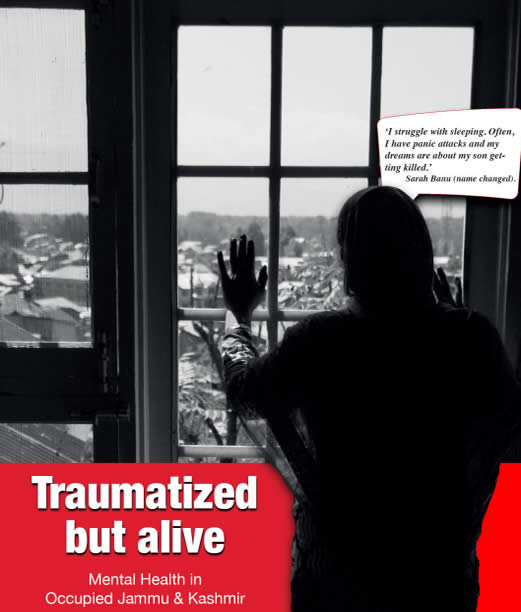
Beyond academics, the prolonged disruption has had a serious psychosocial impact on students. The extended absence from structured learning has been described as deeply distressing, affecting mental health, emotional stability, and motivation. Educators and observers have also noted rising stress levels and behavioral changes among children in conflict-affected areas. The impact has been disproportionately borne by students from lower-income and remote backgrounds, who lack access to alternative digital resources or devices to bridge the learning gap. Even after partial restoration of connectivity, throttled internet speeds continued to hinder online classes, examinations, and academic research, with some teachers reporting that uploading a single lecture could take days.
Although services have gradually improved in recent years, periodic suspensions under the guise of “security” continue unabated. The periodic suspensions show that disruptions to academic routines and digital learning remain an ongoing challenge.
HEALTHCARE: COLLAPSE OF HEALTH SYSTEMS
In this period of turmoil, Kashmir remained under a prolonged communication blackout and strict movement restrictions, which severely disrupted essential public services, particularly the healthcare sector, turning an already fragile system into a serious humanitarian crisis.
Access to timely medical care became extremely difficult, critical services like dialysis, chemotherapy, and surgeries were delayed or reduced due to shortages of staff and supplies. Emergency calls for ambulances were disrupted; many patients had to walk to hospitals due to transport restrictions. Delays in reaching hospitals led to severe outcomes, including reported deaths, stillbirths, and miscarriages.

WHAT HAPPENED IN KASHMIR AFTER IMPOSITION OF A DIGITAL SIEGE;
WHY DOES IT MATTER THE MOST?
The “digital siege” refers to the near-total communications blackout and security lockdown imposed by the Indian government on August 5, 2019, coinciding with the revocation of Article 370 (which had granted Jammu and Kashmir special autonomous status). This turned the Kashmir Valley into what Reporters Without Borders (RSF) and civil society groups like the Jammu and Kashmir Coalition of Civil Society (JKCCS), described as an “information black hole” or “digital apartheid.” It was one of the longest internet shutdowns ever recorded in a democracy. All internet, mobile phones, and landlines were severed valley-wide. Additional troops were deployed, political leaders placed under house arrest or detained, schools and colleges shut, and tourists evacuated. The stated aim was to prevent unrest after the constitutional change. The siege was widely seen as an instrument to silence and control the media, which has otherwise operated fearlessly to keep the world abreast of the developments unfolding in the region. In the aftermath of August 2019, the continued communication blockade and prolonged internet shutdowns severely restricted independent reporting, as journalists were unable to file timely reports, verify facts, or access sources.
Newsrooms struggled to function as communication channels were disrupted, and many journalists were forced to rely on delayed or limited information, often depending primarily on government sources. Those who reported on the complex and unfolding situation on the ground often faced police reprisals, intimidation, and harassment at the hands of the authorities. This fear of reprisals, hanging like a sword over journalists, created a climate in which reporting on ground realities became increasingly difficult. The extensive communications restrictions have significantly impacted press freedom and the flow of independent journalism, drawing repeated criticism from international watchdogs, human rights groups, and local media professionals.
IMMEDIATE FALLOUT
Reliable, independent reporting from the ground became extremely difficult due to:
• Prolonged internet shutdowns and communication restrictions
• Inability of journalists to file timely reports or verify information
• Limited access to sources, officials, and affected communities
• Heavy reliance on delayed updates or official/government channels
• Disruption of newsroom operations and news verification processes
• Fear of surveillance, reprisals, and harassment faced by reporters
• Local outlets like Kashmir Times faced office raids/sealing, loss of government advertising (a key revenue source), and
operational halts. Some publications suspended print editions or struggled to maintain digital presence
• Reporters faced surveillance, repeated police summons, raids, arrests under anti-terror laws (e.g., UAPA), and pressure
to self-censor).
• Independent3
voices face accusations of “spreading secessionist ideology” or “disturbing public order.”
• Foreign correspondents have been restricted or deported for critical coverage.
WHY IT MATTERS?
The digital siege was not merely a temporary security measure—it set a precedent for blanket digital restrictions within a democratic framework, affecting over 8 million people for months and intermittently for years. It underscored how “security imperatives” were asserted at the expense of fundamental rights including freedom of expression, access to information, livelihoods, education, and health. It also deepened the “black hole” effect, making independent journalism both risky and scarce. When combined with UAPA cases against reporters, it significantly reduced scrutiny of governance, human rights conditions, and security operations in a historically disputed region where oversight is especially critical.
==◊ It severely restricted press freedom and independent journalism
◊ It reduced transparency in a conflict-sensitive region
◊ It limited the world’s access to verified ground realities
◊ It created an environment where information flow became controlled and delayed
◊ It raised serious concerns among civil society and international human rights observers about accountability
◊ Restrictions have led to a reliance on official narratives, with fewer opportunities for on-the-ground scrutiny of security
operations, human rights issues, or daily life.
POST 2019 JOURNALISM ENVIRONMENT
For years, independent media played its watchdog role to investigate and report on use and abuse of power by theauthorities at the helm of affairs in J&K. The media’s adept and effective reporting not only brought to the spotlight the Indian government’s unlawful actions in the region, but also served as a rebuttal to the biased portrayal of Kashmir by both the hyper-nationalists and so-called liberal press of India. Press freedom in Kashmir, ironically, fell to its lowest ebb following the abrogation of Article 370 in August 2019. Since then, press freedom has sharply declined, with local journalists facing harassment, surveillance, and charges under stringent anti-terror laws, while foreign correspondents are often denied access or deported for critical reporting.
Beyond the disruption of communication networks under the digital siege, the tightening control over information extended into the media landscape as well. The contentious move led to the effective criminalisation of journalism under stringent laws such as the Unlawful
Activities (Prevention) Act (UAPA). These measures, aimed at reinforcing an official state narrative, have drawn widespread criticism from international watchdogs, which have warned of increasing restrictions on both domestic and foreign media. Reporters Without Borders (RSF, or Reporters Sans Frontières)—a world-reputed organization for promoting and defending media freedom, journalistic independence, and the right to inform and be informed—has consistently highlighted a sharp decline in press freedom in Kashmir, describing the region as an “information black hole” and one of the most dangerous places for journalists. The RSF4 notes that the region is marked by intense surveillance and a severe lack of independent reporting.
It is worth mentioning that since 2019, at least, 20 Kashmiri journalists have been arrested for their reporting, while many others face constant harassment and repeated police summons. Journalists critical of the government’s policies are also subjected to punitive measures, including revoked passports, travel bans, and denial of press card renewals and detention under strict security laws, including the Unlawful Activities (Prevention) Act (UAPA) and the Public Safety Act (PSA)5. In 2025, heightened India–Pakistan tensions following the Pahalgam attack further intensified restrictions, leading to additional blocks on media outlets and new arrests of journalists.
Official Ministry of Home Affairs (MHA) data tabled in the Indian Parliament recently shows that between 2019 and 2023, Jammu and Kashmir recorded 3,662 arrests6 under UAPA, with only 23 convictions (approximately 0.62%), indicating a very low conviction rate relative to arrests. Annual arrests in the region rose sharply after 2019, exceeding 1,200 in both 2022 and 2023, while convictions remained minimal. At least, five Kashmiri journalists have been charged under the Unlawful Activities (Prevention) Act (UAPA), often alongside the Public Safety Act (PSA), which allows detention without trial for up to two years. Several high-profile cases highlight this trend, including Aasif Sultan, Irfan Mehraj, Fahad Shah, Sajad Gul, and
india-jammu-and-kashmir-entire-region-turned-black-hole-information.
Committee to Protect Journalists, An Open-Air Prison: Kashmiri Journalists on How Travel Bans Undermine Press Freedom, 2022, https://cpj.org/2022/09/an
open-air-prison-kashmiri-journalists-on-how-travel-bans-undermine-press-freedom/.
Government of India, Ministry of Home Affairs, Reply to Unstarred Question in Lok Sabha regarding arrests and convictions under the Unlawful Activities (Preven
tion) Act (UAPA), 2019–2023, Parliament of India, New Delhi, 2024.

BROADER CONCERNS
Civil society organisations, UN experts, Amnesty International, and reports such as Kashmir’s Internet Siege by the Jammu and Kashmir Coalition of Civil Society (JKCCS) argue that these restrictions constitute a form of collective punishment, disproportionately affecting access to education, healthcare, livelihoods, and the right to information. While the Indian government has consistently justified such measures on grounds of “national security” and “public order,” critics argue that they also function as an effective instrument to restrict dissent and constrain independent scrutiny.
Despite official claims of normalcy, intermittent internet shutdowns remain a powerful tool for authorities to obscure the situation on the ground, while throttled speeds, selective content blocking, and the temporary closure of social media networks continue to undermine timely and uncensored reporting and the free flow of information. These practices, altogether, have raised serious concerns regarding transparency and accountability in a long-disputed region that remains insufficiently covered by sustained international oversight.
MANUFACTURING CONSENT: A DISCOURSE ANALYSIS OF HOW INDIAN
MEDIA DEHUMANIZES KASHMIRIS AND LABELS LEGITIMATE DISSENT AS
“TERRORISM”
For decades, coverage of Kashmir in sections of the Indian media has often been shaped by dominant state-driven narratives that leave little room for alternative or local perspectives. Within this framing, political grievances and
civil resistance from the region are frequently filtered through a security lens, where even the mere expression of thought or opinion by Kashmiris is readily recast as a threat to national integrity. This has contributed to a discourse in which legitimate Kashmiri voices are routinely marginalised, and at times dehumanised, with legitimate dissent increasingly labelled as “terrorism.” Sadly, the framing of Kashmiris through harmful stereotyping and “othering” in sections of the media has facilitated the construction and reinforcement of dominant state narratives about Kashmir and its people. Critical analyses by independent media outlets and commentators have argued that sections of the Indian mainstream media often construct narratives that equate Kashmiri dissent with terrorism or external interference, particularly
from Pakistan. The Wire has repeatedly documented how such framing contributes to the securitisation10 of political protest in Kashmir and the narrowing of permissible public discourse (The Wire, various reports, 2019–2024). Similarly, foreign media highlighted how dominant media narratives frequently reproduce state-aligned interpretations of events in Kashmir, often sidelining local voices11. These analyses collectively point to authoritarian practices in the region that significantly contribute to what can be understood as the manufacturing of consent—a process that the Indian state appears to have effectively mastered.
HERMAN & CHOMSKY’S PROPAGANDA MODEL:
ITS APPLICATION IN KASHMIR
In the context of Kashmir, media narratives have frequently been shaped through a combination of state influence, regulatory pressure, and strategic framing, where dissenting voices are constrained and coverage is largely aligned with security-centric interpretations of the conflict. Practices such as reliance on official sources, limitations on journalistic autonomy, and indirect forms of coercion have contributed to a media environment in which alternative perspectives—particularly those of local populations—remain underrepresented.
10 The Wire Staff, Kashmir and the Securitisation of Dissent: How Political Protest Is Framed as Security Threat, The Wire, 2020, https://thewire.in/rights/kash mir-securitisation-protest-dissent
11 The Guardian, “A Massacre Has Reignited the Forever War Between India and Pakistan—Once More, Kashmiri Voices Are Missing,” April 29, 2025, https://www.
theguardian.com/commentisfree/2025/apr/29/india-pakistan-kashmir-war-massacre
11DIGITAL SIEGE:
This pattern of selective representation closely aligns with the propaganda model articulated in Manufacturing Consent by Edward S. Herman and Noam Chomsky, which argues that media systems operate through structural filters that systematically privilege state and elite narratives while marginalising dissent. From this perspective, the framing of Kashmir reflects not only editorial choices but also the broader influence of power structures in shaping the production and dissemination of information. In this sense, the representation of Kashmir in sections of the Indian media can be read as an instance of agenda setting and framing that shapes public perception by consistently associating dissent with illegitimacy, thereby limiting the discursive space available for critical engagement with state policy. For example: Post-2019 events, media discourse shifted to “with us or against us,” with jingoism dominating and rational debate sidelined. Kashmiris were often portrayed as “supporters of terrorism” or “anti-national,” with legitimate grievances framed as militancy. The Wire has highlighted media “framing” in UAPA cases, where arrests are presumptively reported as terrorist links, even when later acquitted. This dehumanizes voices and chills dissent.

colonialism, where control over the internet and online spaces is used to limit expression and shape the flow of information. Social media monitoring in Jammu and Kashmir has increasingly resulted in the registration of FIRs under laws such as the Unlawful Activities (Prevention) Act (UAPA) and the Information Technology Act for alleged offences including “fake news,” “disaffection,” and “glorifying terrorism.” Human rights documentation indicates that digital surveillance practices have also involved profiling of users and heightened scrutiny of online activity, with VPN usage at times treated as suspicious or subject to restriction13. Independent commentary, including from Kashmir Times, has further described Kashmir as a “laboratory for digital repression,” pointing to the expansion of surveillance
technologies such as facial recognition systems and practices referred to as “digital arrests,” which contribute to a broader ecosystem of digital control and deterrence of online dissent14.
These measures, together, have contributed to the systematic suppression of Kashmiri voices online, transforming digital platforms from tools of expression into instruments of surveillance and control.
Regional and international media and rights organizations have consistently criticised these policies as disproportionate and violative of fundamental rights, even as official narratives justify them on grounds of security. The impact of these restrictions has not remained confined to 2019 but has persisted through recurring shutdowns, monitoring practices, and regulatory controls extending into 2026. For instance, Kashmir Times (one of the oldest independent outlets) saw its Srinagar office sealed in 2020 and Jammu office raided in November 2025 by the State Investigation Agency (SIA). Its equipment and documents were seized under FIRs alleging “anti-national” content and criminal conspiracy; absurd claims of arms recovery were dismissed by editors as “ridiculous.” Editor Anuradha Bhasin (who challenged the 2019 shutdown in the Supreme Court) called it an attempt to silence independent media. The global media organiszations such as RSF, CPJ, and IFJ condemned the move as an attempt to suppress press freedom.
THE CHILLING EFFECT OF SURVEILLANCE ON THE PRESS
Media practitioners in Kashmir have been operating under an environment shaped by the broader “Digital Siege,” marked by pervasive surveillance and intimidation. The region presents the picture of a police state, where social
media activity is closely monitored, homes are subjected to raids, and individuals expressing dissent are routinely subjected to questioning by authorities. Within this environment, even routine acts of expression—such as writing opinion pieces, participating in peaceful protest, or sharing content online—can attract legal action under sedition or terrorism-related provisions. This environment has completely reshaped the region’s journalism landscape, fostering a climate of fear, insecurity and uncertainty. Over time, it has produced a culture of self-censorship, where sensitive issues are softened or avoided altogether. Resultantly, press independence has weakened, limiting the media’s ability to accurately reflect ground realities. More broadly, fear and surveillance have discouraged civic participation, replacing open debate with enforced silence.
LEGAL TOOLS AND THE CRIMINALISATION OF DISSENT
Draconian laws such as the PSA and UAPA have been increasingly used to suppress almost every form of dissent in the region. According to NCRB data, Kashmir accounted for nearly 37% of UAPA cases between 2020 and 2022, despite comprising a small fraction of India’s population. With vague provisions and limited oversight, these laws enable arbitrary detention and restrict press freedom, effectively criminalising dissent under the guise of “law and order.” International media outlets have extensively documented this pattern, in which journalists and human rights defenders are detained and booked under the PSA and UAPA for extended periods.
13 Kashmir Times, editorial and analysis pieces on digital surveillance in Kashmir describing the region as a “laboratory for digital repression,” including references
to facial recognition and “digital arrests,” various publications (2021–2024).
14 Access Now, The #KeepItOn Report: Internet Shutdowns in India / Kashmir monitoring sections, 2021–2023; and Amnesty International, India: Surveillance and
Digital Rights Concerns, 2022.
REVOLVING DOOR SYSTEM OF DETENTIONS
The Public Safety Act (PSA) has been characterised by critics as enabling a “revolving door” system of detention, where individuals are repeatedly re-booked upon release, often through successive orders issued without trial. Rights observers argue this practice weakens due process and extends administrative detention beyond judicial scrutiny. This pattern is specifically reflected in cases involving political leaders, civil society actors and journalists.
For Example:
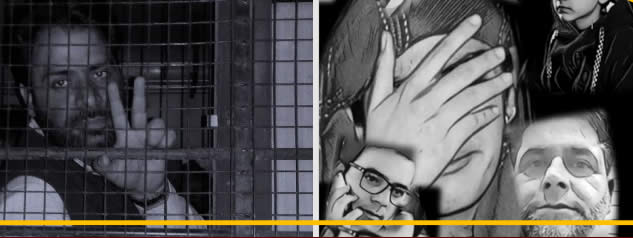
◊ Journalist Irfan Mehraj, associated with the Jammu Kashmir Coalition of Civil Society (JKCCS), has been detained since March 2023 on what critics describe as politically motivated charges linked to JKCCS coordinator Khurram Parvez,
detained since 2021.
◊ Amnesty International has cited these cases as part of a broader pattern targeting journalists and human rights defenders.
◊ Other cases include journalist Asif Sultan, writer Sajad Gul, and photojournalist Manan Dar.
Since 2019, at least 35 journalists have reportedly faced interrogation, raids, or criminal proceedings, alongside routine summons and digital seizures, including incidents reported in 2025. JKCCS has also documented police complaints against journalists and the targeting of over 200 social media users, describing an expanding framework of surveillance and legal pressure on civil society.
EXPANDING REACH OF AGENCIES
Alongside these laws, agencies such as the NIA and ED have expanded their presence in Kashmir, conducting raids on journalists, activists, and political figures, often citing terror funding or financial irregularities. Critics argue
that these actions are used to intimidate and silence dissent, placing financial and psychological pressure on those critical of state policies.
SHRINKING CIVIC SPACE
The combined use of legal measures, surveillance, and enforcement actions has significantly curtailed fundamental rights, including freedom of speech and assembly. Internet shutdowns, travel restrictions, and media controls have further deepened this repression. This climate of fear has discouraged activism, protest, and independent journalism, drawing sustained criticism from human rights organisations, including Amnesty International, which has warned that such measures aim to stifle dissent and control the flow of information.

PRE-2019 INTERNET SHUTDOWN TRENDS
Internet shutdowns in Indian occupied Jammu and Kashmir did not just begin in 2019. They had already become embedded in a governance framework designed to control a population struggling to assert its political claims through repeated mass uprisings that have shaped the region’s political landscape since the 1990s. Indian authorities have consistently sought to obscure ground realities by restricting social media, ostensibly to prevent Kashmiri voices from reaching a global audience. This pattern was evident in 2008, 2009, 2010, and again in 2016, when millions of Kashmiris took to the streets demanding freedom and justice. During these periods, communication controls were
routinely imposed, limiting the flow of information beyond the region.
Documentation by the Jammu Kashmir Coalition of Civil Society (JKCCS) situates these measures within a broader pattern of constraints on fundamental rights, particularly access to information. Its reports point to a steady escalation in both the frequency and normalization of shutdowns over time. In the early 2010s, disruptions were sporadic—three instances in 2012 and five in 2013. By 2014–2016, the number had risen to around five annually. This increased15 to roughly ten in 2016–17, before rising sharply to over 30 in
2017–18 and reaching approximately 65 by early 2019. Though many shutdowns were short-lived, their cumulative effect was significant, producing recurring interruptions to daily life.
The 2016 mass uprising triggered by the killing of Burhan Wani marked a critical shift. Communication networks— including mobile internet and, in some cases, broadband—were suspended for extended periods. These disruptions, lasting over four months cumulatively, represented one of the longest pre-2019 restrictions in the region. By 2017 and 2018, shutdowns had become a routine administrative response to protests, security operations, and preventive concerns. Districts such as Srinagar, Pulwama, and Shopian experienced repeated disruptions. What had previously been exceptional increasingly became standardized practice. According to JKCCS, 55 internet shutdowns were recorded in 2019, with 54 occurring before 5 August. The shutdown initiated on the night of 4–5 August extended into a 149-day blackout—the longest at that time—underscoring the scale of the escalation. The effects were wide-ranging. Shutdowns disrupted education and healthcare services, hindered business activity, and constrained journalistic work. They also limited independent verification of events, raising concerns about transparency and accountability.
Independent data corroborates these trends. The Software Freedom Law Centre reports that approximately 180 shutdowns occurred in Jammu and Kashmir between 2012 and 2019. In 2017 alone, at least 24 mobile internet shutdowns were recorded, with an estimated economic loss of $223 million. In 2018, the region accounted for between 41 and 65 shutdowns, the highest in India that year. While authorities have typically justified these measures on grounds of public order, critics have characterized them as disproportionate and lacking adequate safeguards. Taken together, pre-2019 shutdowns were generally shorter in duration than those that followed, but they established a consistent pattern. Over time, this pattern normalized the use of communication restrictions as a governance tool, with lasting implications for freedom of expression and access to information in the region.

DIGITAL SIEGE OF KASHMIR: KEY FINDINGS
The “digital siege” of Kashmir, as reflected in multiple reports, has become a routine practice aimed at controlling the native population, which has consistently contested the Indian government’s authority and claims over the region.
SHUTDOWNS AS TOOLS OF CONTROL:
The frequent and often prolonged shutdowns have become a convenient tool for authorities to silence dissent by limiting communication and restricting reporting.
ECONOMIC AND SOCIAL IMPACT:
Prolonged shutdowns have resulted in significant losses to the local economy, particularly in sectors such as tourism, agriculture, and handicrafts. They have also severely affected access to education and healthcare.
LONG-TERM CONSEQUENCES:
While Indian authorities often justify these measures in the name of “national security,” evidence on the ground indicates that they have substantially contributed to the suppression of political dissent and the erosion of the fundamental right to freedom of opinion and expression.
CONCLUSION
The situation in the disputed region remains complex, shaped by decades of unresolved conflict that continues to await settlement in accordance with relevant United Nations Security Council (UNSC) resolutions. At the same time, prolonged restrictions on communication and media have irrefutably narrowed the diversity and independence of information emerging from Kashmir, as documented by multiple credible observers. Restoring broader digital access and ensuring the safety of journalists would help address the growing “black hole”
in information flows, while allowing legitimate political voices to be heard and their concerns addressed politically through dialogue, diplomacy and sustained engagement.
Since 2019, the space for independent reporting in Kashmir has squeezed significantly, with local dailies such as Kashmir Times and other publications facing sustained pressure. Meanwhile, sections of the Indian mainstream media—widely criticized for failing to uphold editorial independence and journalistic impartiality in coverage of the Kashmir conflict—have increasingly echoed official government narratives. The Indian media’s complicity in willfully acting as a mouthpiece of the government has not only distorted the historical realities of the Kashmir issue but has also further complicated the conflict. In such an environment, restoring the free flow of information, lifting restrictions on the media, and safeguarding the right to freedom of expression are not merely matters of access—they are fundamental to accountability, transparency, and the protection of basic rights.


Related Reports