INTERNATIONAL CONCERNS OVER HUMAN RIGHTS IN JAMMU AND KASHMIR


STATEMENTS BY THE INTERNATIONAL ORGANIZATION & INTERNATIONAL NON-GOVERNMENTAL ORGANIZATION
KASHMIR: KASHMIRI JOURNALIST AND HUMAN RIGHTS DEFENDER IRFAN MEHRAJ HELD FOR THREE-YEARS IN PRE-TRIAL DETENTION
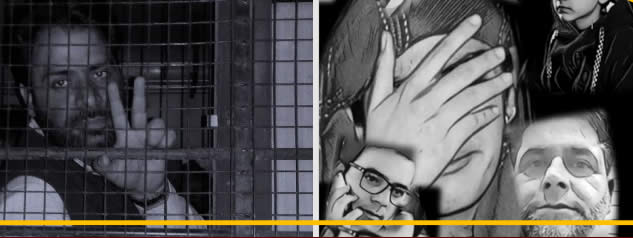
As journalist and human rights defender Irfan Mehraj marks three years in arbitrary detention tomorrow, we the undersigned civil society organizations call for his immediate and unconditional release. We continue to stand in solidarity with Irfan and his family. Our organisations also demand an end to the Indian government’s continued repression of human rights defenders and journalists in Jammu and Kashmir. On 20 March 2023, Irfan Mehraj was detained by India’s National Investigation Agency (NIA) under provisions of the Indian Penal Code and the Unlawful Activities (Prevention) Act (UAPA)
on politically motivated and fabricated charges. According to the NIA, Irfan Mehraj was arrested for being ‘a close associate of Khurram Parvez’. Khurram Parvez is a HRD and the Program Coordinator of the Jammu Kashmir Coalition of Civil Society (JKCCS), a leading civil society organisation in Jammu and Kashmir. Indian authorities continue to arbitrarily detain Khurram Parvez for over four years now on politically motivated and fabricated charges.
In recent months, the police continued to harass and intimidate journalists from Indian-administered Kashmir for their reporting, including through summoning them for repeated police interrogations and demanding that journalists sign a bond undertaking that they will not do anything that would ‘disturb peace’. The Indian government has continuously failed to respond to concerns regarding human rights violations in Kashmir raised by United Nations experts and international human rights organisations. India should respect its international human rights obligations and end its reprisal against human rights defenders and journalists, especially in Jammu and Kashmir. Other countries at the UN Human Rights Council should address these flagrant violations by a sitting member state.
Our organisations urge the Indian authorities to repeal repressive laws including the UAPA and the PSA and to create an enabling environment for civil society and the media to freely and independently operate in Jammu and Kashmir. As India continues to work towards securing stronger multilateral and bilateral relations, we call on the international community to urge the Indian government to comply with its international human rights obligations, release Irfan Mehraj, Khurram Parvez and all other detained Kashmiri human rights defenders and end its repression in Jammu and Kashmir.

KASHMIR IN GLOBAL HUMAN RIGHTS REPORTS


INDIA’S YEAR IN REVIEW
Operation Sindoor
Following the terror attack in Pahalgam in Kashmir, which killed 26 people, India launched missile strikes on the infrastructure of Pakistan’s militant groups on May 7. Islamabad retaliated, and border skirmishes followed over the next three days. On May 10, it looked like things were taking a turn for the worse after India accused Pakistan of launching attacks on its air bases. But both sides announced a ceasefire later that day. The obvious impact of this escalation — the first major one in a couple of decades — was the further souring of India-Pakistan relations.But what is more significant is the realignment of Washington. In the months since the ceasefire, US President Donald Trump has taunted India through his growing friendship with Pakistan’s army chief Field Marshal Asim Munir. He has also, despite India’s vehement denial, tried to take the credit for the truce.

This year, India recalibrated its foreign policy. Prime Minister Narendra Modi travelled to China for the first time in seven years and met President Xi Jinping. The two countries reaffirmed their commitment to “co-operation based on mutual respect, mutual interest and mutual sensitivity”. In December, Russian President Vladimir Putin visited New Delhi. India has been careful not to overtly provoke Trump, but it has also shown that it will not be pushed over by him. In 2026, India will have to continue walking this tightrope. While New Delhi’s relations with Beijing have thawed, both parties are still wary of each other. The recent escalation of troubles in Bangladesh will also have a bearing on the region. India will have to manage a tricky balance of allying with the US, China and Russia, while also dealing with tensions in its neighbourhood.
INTERNATIONAL MEDIA COVERAGE BY LEADING
NEWS OUTLETS

ACROSS SOUTH ASIA, LEADERS PROMOTE
HATE AS A DISTRACTION
In India, after two terms in office, the BJP still pursues toxic Hindu majoritarianism to win votes. BJP leaders engage in hate speech during election campaigns, and after mobilising hostilities, they are unable, or unwilling, to rein in their supporters when they beat Muslims to death, jeer at Christians, or abuse Sikhs and Dalits. When protests break out, the authorities use a range of abusive laws, including terrorism allegations, to jail people, and demolish private properties in violation of Supreme Court orders. Political leaders should recognise that hatred, failure to provide justice without bias, or suspending human rights, will only generate more abuse and eventually could even lead to public rage that could result in an abusive political leader’s desperate flight abroad to escape a popular uprising.They should instead try working toward equality, generating employment, delivering health care, providing quality education, and otherwise ensuring that the population’s rights are protected. In the end, real improvements in people’s lives – not manipulation and division for political gain – is a meaningful measure of success.
INDIA IS PROFILING KASHMIR MOSQUES, RAISING NEW SURVEILLANCE FEARS
Residents say the police exercise feels less like a routine survey and more like an attempt by the state to exert control over Kashmir’s religious institutions. One page of the form collects information about the mosque itself, seeking information about the “ideological sect” it belongs to, the year it was founded, its sources of funding, monthly expenditure, the number of people it can congregate, and details on ownership of the land on which the structure stands. The remaining three pages collect personal details of the people – imams, muezzins, khatibs and others – associated with the mosque,
including their mobile numbers, emails, passport, credit card and bank account details. The more insidious columns in the form ask the respondents to declare if they have relatives abroad, the “outfit” they are associated with, or even the model of their mobile phone and their social media handles.
A similar form has also been shared with the people running “madrasas” (religious schools) in the region. “This is not a place where you can live in peace. Every now and then, we are asked to fill out one form or another,” Nawaz, 41, told Al Jazeera as he sat inside his grocery shop in Jawahar Nagar area
of Srinagar.
INDIAN POLICE SUMMON JOURNALISTS IN KASHMIR OVER ROUTINE REPORTING
On January 14, Bashaarat Masood, an assistant editor with The Indian Express, was called to the Cyber Police Station in the city of Srinagar for questioning about a report he wrote on reaction to a police exercise seeking information about the region’s mosques and their management, according to multiple news reports. Officers then took Masood to a district magistrate and asked him to sign a bond stating he would not repeat his “mistake,” without specifying any legal violation. Masood refused to do so and was asked to report back to the police station daily over the next four days.
Under India’s criminal procedure framework, now called the Bharatiya Nagarik Suraksha Sanhita, police can seek a preventive bond from individuals to “keep the peace” or maintain “good behavior,” even in the absence of a criminal charge. On January 19, a Srinagar-based correspondent for the Hindustan
Times, Ashiq Hussain, was also summoned by police in connection with his reporting, according to news reports. Hussain did not comply with the summons, citing a lack of clarity from police about the basis for the questioning.
INDIA: RELIGIOUS MINORITIES, CRITICS UNLAWFULLY TARGETED
Hate speech often linked to Hindu nationalist groups and attacks against Muslims increased. Authorities continued to carry out unlawful demolitions of homes and properties of Muslims, claiming they were built illegally, belonged to alleged militants, or were occupied by “illegal immigrants,” actions that violated a Supreme Court ruling. Several activists, including students, remained in jail without charge under the abusive counterterrorism law. The authorities also used foreign funding laws, counterterrorism laws, fabricated financial investigations, and other means to harass and prosecute activists, civil society groups, and the BJP’s political opponents. Indian authorities should end discriminatory policies, use of hate speech, and inciting unlawful action against Muslims, Christians, and other religious minorities, and ensure justice for those harmed, Human Rights Watch said. They should stop harassing and
prosecuting civil society groups, the BJP’s political opponents, and peaceful protesters, and immediately drop all politically motivated charges against activists and other critics.
ATTACKED IN INDIA, KASHMIRI SHAWL SELLERS CHOOSE BETWEEN SAFETY, LIVELIHOOD
A surge in attacks has forced many Kashmiris to return home. Others are devising survival strategies, such as WhatsApp groups where they alert each other about places to avoid. Ayaz Ahmad stares at his screen, fingers moving rapidly as he types in a group chat on his mobile phone. Ahmad, 28, goes around houses in Hisar, a city in northern India’s Haryana state, selling shawls and other handicraft items – like thousands of other itinerant traders from Indian-administered Kashmir, who crisscross the country on foot or bicycles. But a spate of hate attacks faced by the shawl sellers in recent weeks has forced them to rethink and strategise what was once a common, winter-time sight across Indian cities: Kashmiris lugging large wraps holding shawls and other wares.
Ahmad now runs a WhatsApp group in which nearly two dozen members share information as they guide each other on areas to
avoid. “I guide them on where to go and where to avoid because some areas are fine, but others have seen harassment against our members,” Ahmad told Al Jazeera. “Now, our priority is safety rather than business, as harassment incidents continue to happen to our members almost every day.”
KASHMIR, SPYING, DEMOLITIONS: HOW MODI’S INDIA EMBRACED ‘ISRAEL MODEL’
As India under Modi openly embraces Israel, New Delhi appears to import more than just weapons. One of the world’s most militarised zones, Kashmir has since August 2019 been stripped of not just its earlier semi-autonomous status, but of most democratic power – as a region – that other provincial
authorities have. The Modi government’s move to kill political dialogue or diplomatic engagement when it comes to Kashmir also mirrors Israel’s approach, said Bose, also a professor of international politics at Krea University, in India. “It echoes Netanyahu’s approach of rejection and non-engagement
with the Palestinians and the exclusive reliance on military power,” he added. To be sure, Kashmir and Palestine have a very distinct past and present. Still, India’s approach to Kashmir increasingly carries parallels with Israel’s treatment of the West Bank, said Essa. “There is the militarisation, population management, and the legal regimes that allow both India and Israel to conduct their occupations and maintain daily control over the people – from checkpoints to raids and communication blackouts,” Essa told Al Jazeera.
“Like the occupied West Bank, India maintains Kashmir in a state of permanent emergency, where military presence, surveillance, and extraordinary legal powers shape everyday life,” he argued. “And like the West Bank, daily governance in Kashmir is outsourced to localadministrators with limited real power.
NARENDRA MODI: INDIA’S MOST PRO-ISRAEL LEADER
As India’s Prime Minister Narendra Modi visits Israel, the relationship between Modi and Netanyahu has never been deeper. Since taking office in 2014, India and Israel have grown closer, not just as strategic partners, but through a shared worldview. Modi is considered to be the first leader to call Netanyahu in the hours following the Hamas-led attacks of 7 October 2023, a move that would set the tone for India’s support for Israel’s genocide in Gaza. In Netanyahu, Modi saw someone like himself, a populist leader of an ethno-religious state built on military strength. Whilst in power, Modi mirrored the Israeli model, advancing Hindu nationalism at home and weaponising the “war on terror” in Kashmir.
THREE LIFE TERMS FOR KASHMIR’S AASIYA ANDRABI FIT INDIA’S ‘BROADER PATTERN’
Legal experts say the 64-year-old grandmother’s harsh conviction is mainly based on offensive speech-making, a move that raises questions about India’s tolerance of dissenting voices. Activists and legal experts have condemned an Indian court’s verdict that handed down three life sentences to prominent Kashmiri separatist Aasiya Andrabi, saying the harsh sentencing of a 64-year old woman “fits a broader pattern” of India’s policy with dissenting voices in the disputed region.
Andrabi, the founder of Dukhtaran-e-Millat (DeM), a banned all women’s organisation, was sentenced on March 24 by a special National Investigative Agency (NIA) court in New Delhi. Two of her associates, Sofi Fehmeeda, a wheelchair-bound 36-year-old, and 61-year-old Nahida Nasreen, were also given 30 years in jail. The three women were arrested by the NIA in 2018 under the Unlawful Activities Prevention Act (UAPA), a draconian anti-terror law, and various sections of the Indian Penal Code. The UAPA, first introduced in 2008 by the centrist Congress party, was given more teeth by Prime Minister Narendra Modi’s right-wing government, which allowed authorities to declare individuals – not just organisations – as “terrorists” among the several amendments made in 2019.
AASIYA ANDRABI: HOW INDIA’S TERROR LAWS TURNED DISSENT INTO LIFE SENTENCES
64-year-old Kashmiri grandmother was sentenced to life imprisonment under India’s anti-terror laws earlier this week, despite the court failing to prove she committed, funded, or carried out any acts of violence, Middle East Eye can reveal. On Tuesday, an Indian special court handed down three life sentences against Aasiya Andrabi under various provisions of the anti-terror law and the Indian Penal Code. Two of her associates, Sofi Fahmeeda, 36, and Nahida Nasreen, 61, received 30 years each. The news of her sentencing trickled through Indian media, where the verdict was largely framed as a confirmation of guilt. But beyond the surface, much of the media refused to engage with court documents or look beyond the predictable mudslinging that erupted after neighbouring Pakistan condemned the decision. In fact, court documents reviewed by Middle East Eye show that despite prosecutors failing to prove she conspired to wage war, fund terrorism, or incite violence, the court still decided to impose the maximum sentence - even after acquitting her of those charges.
INDIA: KASHMIRI JOURNALIST AND HUMAN RIGHTS DEFENDER IRFAN MEHRAJ HELD FOR THREE-YEARS IN PRE-TRIAL DETENTION
Civil society organizations are calling for the immediate release of Kashmiri journalist and human rights defender Irfan Mehraj, who has been held in pre-trial detention for three years. He was arrested by India’s National Investigation Agency (NIA) under the UAPA on politically motivated charges and is allegedly associated with human rights defender Khurram Parvez. The organizations condemn the Indian government’s repression of human rights defenders and journalists in Jammu and Kashmir, urging the repeal of laws like UAPA and PSA. They call on the international community to press India to respect human rights and release all detained Kashmiri human rights defenders.
SEXUAL VIOLENCE AND THE WEAPONISATION OF THE LAW
In 2016, India’s National Investigation Agency proscribed DeM as a “terrorist organisation,” citing links to Pakistan’s Directorate for Inter Services Intelligence and alleged support for banned figures. By labelling an organisation of women providing education and rehabilitation as “terrorist”, India sought to criminalise and malign the inalienable right of Kashmiris to self-determination as extremism and to paint women who organised against rape as security threats, turning them into enemies of the state. Despite the proscription, DeM continued to provide material support to families affected by the occupation.
Three decades later, in March 2026, the same machinery of repression that had forced Aasiya Andrabi underground in 1990 condemned her to effectively die in prison. Andrabi was accused of terrorism, waging war against the Indian government and being a member of a terrorist group — charges that
were not substantiated. A Delhi court handed Andrabi, now a frail 64-year-old, three consecutive life sentences — effectively a death sentence. The prosecution’s case collapsed under scrutiny.
KHURRAM PARVEZ AND VILMA NÚÑEZ RE-ELECTED AS DEPUTY SECRETARIES-GENERAL OF FIDH
On 28 March 2026, the International Bureau of the International Federation for Human Rights (FIDH) re-elected Vilma Núñez and Khurram Parvez to the positions of Deputy Secretaries-General, roles they had held for the past three years. These two activists from Nicaragua and Kashmir have been deprived of their freedom since 2023. Mr. Parvez is imprisoned, while Ms. Núñez, stripped of her citizenship, is stateless and vulnerable in her own country. Paris, 21 April 2026. Re-elected unanimously, these two major figures in the struggle for human rights embody, through their own situations, broader dynamics of repression and impunity in their respective countries.
Khurram Parvez, a leading Kashmiri defender and FIDH Deputy Secretary-General since 2023, has been arbitrarily detained without trial for several years. His imprisonment is part of a massive restriction of civic space in Kashmir since 2019. For Alexis Deswaef, President of FIDH: “The deprivation of rights suffered by Khurram and Vilma are absolute scandals. Human rights defenders must be protected, listened to, and supported, not persecuted. Of course, we are well aware that, under current circumstances, it is impossible for Vilma and Khurram to effectively carry out their mandates. But our intention is to show India and Nicaragua, on the one hand, that we have not forgotten them, and on the other, that they are full members of FIDH. Their governments must take this into account.”
FIDH calls for the immediate release of Khurram Parvez, an end to the repression in Nicaragua, and the prompt restoration of the nationality and all rights of Vilma Núñez and all those who have been arbitrarily stripped of them.
Related Reports