GUILT BY GEOGRAPHY: THE EPIDEMIC OF FALSE TERROR CHARGES & ITS TOLL ON KASHMIRIS
GUILT BY GEOGRAPHY: THE EPIDEMIC OF FALSE TERROR CHARGES & ITS TOLL ON KASHMIRIS


For decades, the people of the Indian-administered region of Jammu and Kashmir have been trapped in a dangerous situation, marked by a pervasive military presence, systemic state repression, and widespread human rights violations. Systematic suppression—including arbitrary arrests, unlawful and prolonged detentions under draconian laws, torture, and custodial killings—has profoundly shaped the region’s social, political, and
psychological landscape.
Alongside the armed forces, India’s investigating agencies, such as the National Investigation Agency (NIA), Enforcement Directorate (ED), State Investigation Agency (SIA), and others, have also played a cunning and deeply troubling role in this context. Operating without proper legal oversight, these agencies have significantly contributed to institutionalizing the stigmatization of Kashmiri identity within their security doctrine and legal apparatus. This institutionalized stigmatization was—and continues to be—reinforced by marathon vilification campaigns on the mainstream media where Kashmiris are routinely branded as “rabid fanatics”, “terrorists” and “anti-national”.
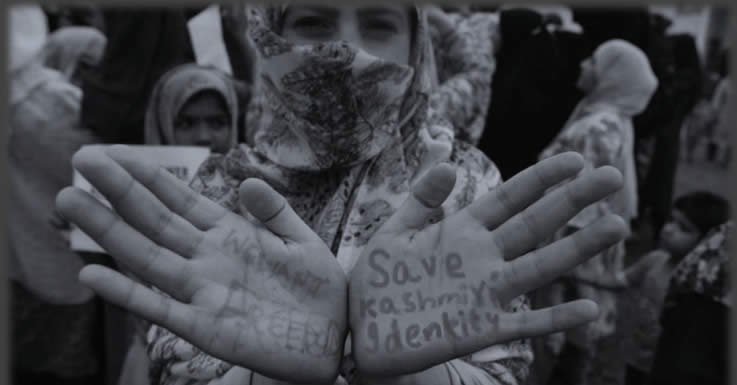
Such venomous narrative-building has hugely contributed to the large-scale otherisation and demonization of the Kashmiri people. As a result, this shameful practice gradually normalised a widespread presumption of guilt rooted in geography and identity, leading Kashmiris to be viewed through a lens of suspicion and presumed culpability. Meanwhile, media trials that portray accused Kashmiris as guilty before conviction, combined with sensationalized coverage, have blurred the line between the accused and the convicted, undermining the presumption of innocence and fueling public suspicion.
This pathetic approach, fraught with severe human consequences, continues to erode the principles of due process, fair trial, and the rule of law. It has resulted in wrongful arrests, prolonged detentions, and, in many cases, harsh convictions based on weak or fabricated evidence. Regrettably, Kashmiris have paid the highest price for this prejudice, which has deeply crept into India’s political and institutional hierarchy. This cunning and highly reprehensible approach not only destroyed individual lives but also inflicted immense suffering on families, whose loved ones were falsely implicated and condemned to spend years in jail. Even when their loved ones were later exonerated, the lingering stigma of false accusations, together with the psychological trauma and the economic and social fallout, continued to haunt them long after their names had been cleared.
Summary
This report is a modest attempt to document cases in which innocent Kashmiris were arrested on mere suspicion, wrongfully convicted, and later exonerated. It seeks to highlight recurring patterns of injustice, expose systemic institutional failures, and underscore the urgent need for accountability in India’s handling of terror-related cases.
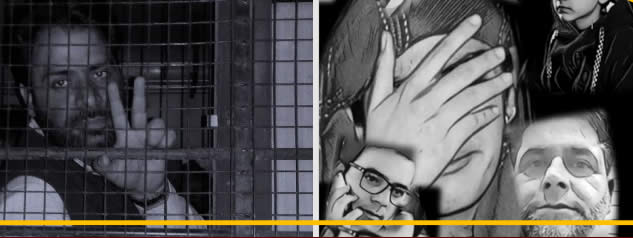
Although Kashmir has witnessed numerous instances of innocent civilians being scapegoated, this report, however, focuses on the nightmarish ordeals of Kashmiris implicated in high-profile terror cases in India between 1996 and 2001, whose prosecutions were shaped by xenophobia, prejudice, and deep-rooted systemic injustice. These individuals were not only wrongfully charged but also imprisoned for years, only to be ultimately exonerated after spending a decade or more behind bars. Among the victims were five Kashmiri boys, accused of plotting blasts in New Delhi and Rajasthan, who were arrested in 1996 and spent 23 years in prison before being acquitted by the Rajasthan High Court in 2023. The sixth victim, who worked as an assistant project manager at an NGO called Maya Foundation, was arrested for alleged links to “terrorist networks” and endured eleven years in jail for a crime he never committed.
Another Kashmiri intellectual, S. A. R. Geelani, a professor at Zakir Hussain College in Delhi and accused in the 2001 Indian Parliament attack case, was imprisoned for two years before his acquittal in 2003. Similarly, two clerics hailing from North Kashmir’s Barramulla district, were arrested in Gujarat in 2006 in a false case, and spent more than six years behind bars before being acquitted by a court in September 2023. In several judgments, higher courts in India strongly criticised the investigations and the conduct of the concerned agencies, highlighting serious procedural lapses, inconsistencies, and discriminatory practices. However, the Indian government neither offered any compensation nor acknowledged the harm inflicted upon them, nor did it initiate any disciplinary action or inquiry against those who filed the false cases.
The epidemic of false terror charges & its toll on Kashmiris5 The woeful plight of these innocent Kashmiris, who were forced to spend their most productive years of life in the dark dungeons of prisons and interrogation centres outside the Valley, lays bare the deep institutional failures of
India’s policing and its investigative apparatus. On the other hand, their implication in such cases on mere assumptions reveals unprofessional conduct, structural weaknesses, and deep-seated prejudices, as well as a clear bias against Kashmiris. Adding to their ordeal was the shocking conduct of India’s mainstream media, which remorselessly peddled falsehoods and portrayed these innocent victims as “rabid fanatics” and “dreaded terrorists” before the Indian public and the world at large.
Instead of reporting facts, much of the media acted as an amplifier of the Hindu-nationalist narrative, portraying Kashmiris as perpetual suspects. Newsrooms echoed political propaganda, fueling hatred and suspicion that ultimately cost innocent people their lives, careers, and futures. Rather than adhering to journalistic neutrality, large sections of the mainstream media functioned as mouthpieces of the ruling party and other right-wing political organisations, disseminating misleading narratives that inflamed public hostility toward Kashmiris and helped legitimise coercive state actions. The consequences of this politicised and hostile environment were not borne by those who engineered these narratives, but by innocent Kashmiris, whose lives were shattered in prisons and detention facilities, while the architects of these false narratives faced no accountability.
Kashmiris Wrongfully Implicated and Later Acquitted
1. Ali Muhammad (Ali) Bhat
Bhat1, arrested in connection with the 1996 Lajpat Nagar blast in Delhi and the 1996 Samleti (Rajasthan) bus
blast, was apprehended by Indian agencies in Kathmandu, Nepal, where he was living and working as a seller
of Kashmiri carpets. Following his arrest in Nepal, he was brought to Delhi to face charges related to the Lajpat
Nagar case

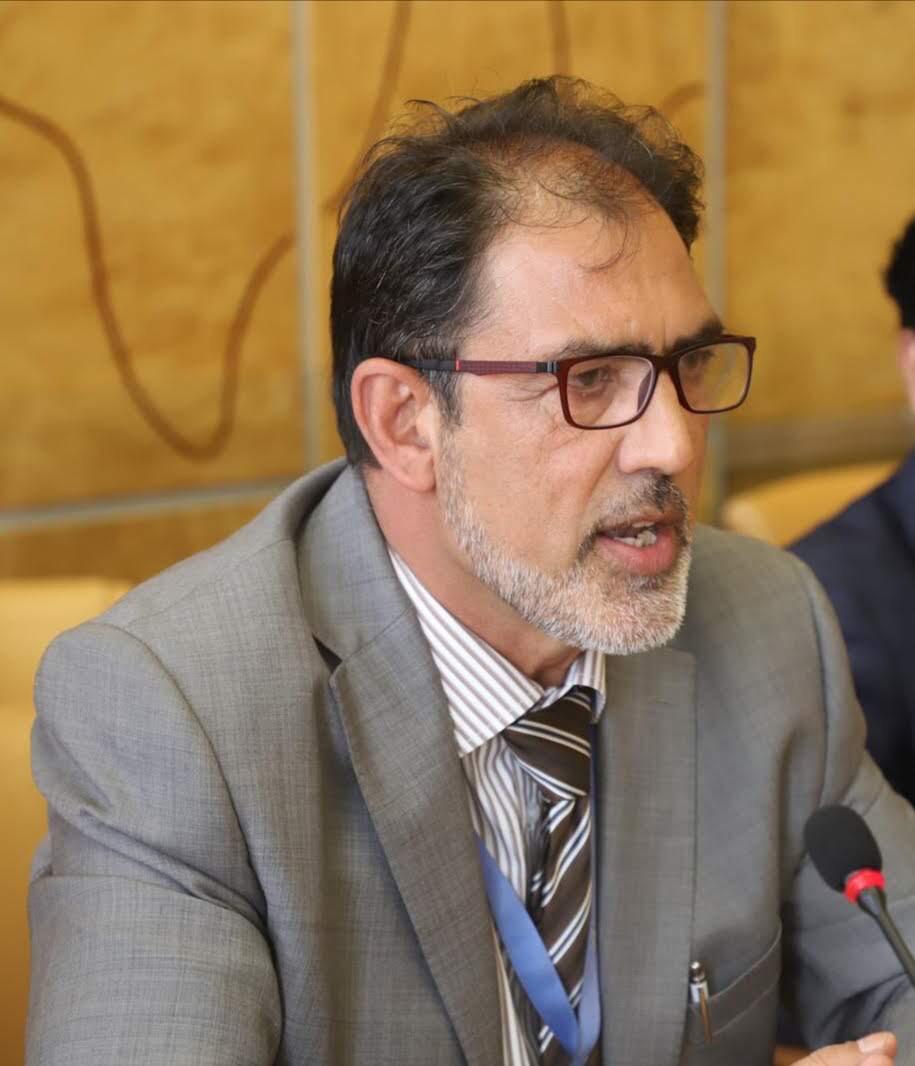
Lateef Ahmad Waza
1 Nazir Masoodi, “Unjustly Jailed for 23 Years, Ali Mohammed Bhat Returns to Parents’ Grave,” *NDTV*, July 26, 2019, [https://www.ndtv.com/india-news/unjustly-jailed-for-23-years-for-lajpat-nagar-and-samlet-blast-ali-mohammed-bhat-returns-to-parents-2075796]
2 Acquitted in Samleti Blast Case: After 23 Years, They Return to Parents’ Graves, Unfamiliar Faces.” The Indian Express, July 26, 2019. https://indianexpress.com/article/india/acquitted-in-samleti-blast-case-after-23-years-they-return-to-parents-graves-unfamiliar-faces-5852763/

Abdul Ghani
Ghani3, a resident of Bhaderwah village in district Doda of Jammu was one of the coaccused in Lajpat Nagar blast. He kept on pleading that he is a teacher and know nothing about the blasts, but no one listened. He also spent more than 20 years in jail along wither coaccused in Lagpat Nagar blast.
Bashir Ahmed Baba
Baba4, a Kashmiri computer professional and assistant project manager at the NGO “Maya Foundation”, was arrested in Gujarat in 2010 under the Unlawful Activities (Prevention) Act (UAPA). He had traveled to Gujarat to attend a four-day training workshop on post-cancer care, intending to provide such services to patients in the Valley. He was accused of setting up a terror module and recruiting Muslim men allegedly angered by the 2002 Gujarat riots.
Family Loss
Baba, who spent eleven years in detention was not allowed to meet his father, a cancer patient who passed away while he was in jail. Moreover, two of his close relatives, including his father and uncle, died during his prolonged incarceration, yet authorities did not permit him to attend their funerals.
Court verdict
After 11 years in jail, Baba was acquitted due to lack of sufficient evidence5. The Gujarat court, while acquitting him, said prosecutors had failed to prove beyond doubt any link with terror acts or terrorist organization; the court noted much of the prosecution’s case seemed driven more by “emotion” than by solid evidence6. The court observed that the key “confession” was not admissible since his interrogation involved detention and possible coercion.
Bilal Ahmed and Saiyed Zabiuddin
Ahmed and Zabiuddin, both from Baramulla7 in Kashmir, were accused in a 2006 terrorism case in Gujarat. They were later acquitted by a Gujarat court8 after the prosecution failed to provide credible evidence. “There were no solid witness testimonies and no concrete jihadi literature to substantiate the conspiracy or terrorism charges—The Times of India report.
3 “Bhaderwah resident acquitted in Lajpat Nagar case reaches home.” Kashmir Life, October 8, 2025. https://kashmirlife.net/bhaderwah-resident- acquitted-in-lajpat-nagar-case-reaches-home-216291/
4 “UAPA case that fell 11 years later: Gujarat court says no proof to prove any terror links.” The Indian Express, July 10, 2021
5 NDTV. “11 Years in Jail Under Anti-Terror Law, Kashmir Man Acquitted of Charges.” NDTV, June 19, 2021. [https://www.ndtv.com/india-news/11- years-in-jail-under-anti-terror-law-kashmir-man-acquitted-of-charges-2477244]
6 Indian Express. “UAPA Case That Fell 11 Years Later: Court Says No Proof to Prove Any Terror Links.” Indian Express, June 20, 2021. [https:// indianexpress.com/article/india/uapa-case-that-fell-11-years-later-court-says-no-proof-to-prove-any-terror-links-7397476/]
7 “Guj court lets off two J&K clerics in terror case.” The Times of India, September 20, 2023. https://timesofindia.indiatimes.com/india/guj-court- lets-off-two-jk-clerics-in-terror-case/articleshow/103795350.cms
8 Gujarat Court Acquits Two NorthKashmir Residents in 2006 Terrorism Case,” Greater Kashmir, September 2023

Arrest, Trial, and Acquittal
Professor Geelani was arrested in the aftermath of the 13 December 2001 Indian Parliament attack. He was accused of being part of the conspiracy behind the attack, primarily based on an intercepted telephone conversation between him and his younger brother, which authorities interpreted as support for the attack. In December 2002, a special court convicted Geelani (along with other accused) under the Prevention of Terrorism Act (POTA), the Indian Penal Code (IPC), and the Explosive Substances Act, sentencing him to death9. However, on appeal, the Delhi High Court acquitted Geelani in October 2003, citing a lack of sufficient evidence10.
The prosecution appealed, but the Supreme Court of India upheld his acquittal in August 2005. The court’s decision highlighted serious flaws in the prosecution’s case. Key evidence, particularly the intercepted telephone call and its translation, was deemed unreliable, dealing a significant blow to the official narrative of the Parliament attack. Geelani’s acquittal became one of the most widely discussed examples of wrongful accusation in India’s counterterrorism prosecutions. After his acquittal, Geelani faced continued scrutiny and harassment. In 2005, he survived an assassination attempt outside his lawyer’s residence. In 2016, he was again arrested under sedition charges during a public event marking the death anniversary of a convicted Parliament attacker, though he was later granted bail. Geelani passed away followed a cardiac arrest on 24 October 2019, after enduring years of legal battles, imprisonment,
and social stigma. He lived his life as a teacher, an educator and a tireless defender of human rights.
What happened in his case?
Arrest (2001): Geelani was detained soon after the attack under POTA (Prevention of Terrorism Act). Trial Court Verdict (2002): He was sentenced to death along with Mohammad Afzal Guru and Shaukat Hussain Guru. Appeal in Delhi High Court (2003): The High Court overturned his conviction, ruling that there was no credible evidence linking him to the attack. Supreme Court (2005): The acquittal was upheld. The court emphasized that the prosecution had failed to prove his involvement, and serious lapses were noted in the investigation.
Aftermath
Geelani continued to speak publicly about wrongful prosecutions and civil liberties. His case was widely cited by human rights groups as an example of:
• Fabricated evidence,
• Torture and coercion,
• Communal profiling, and
• Misuse of anti-terror laws.
9 “Kashmiri gets death for parliament attack,” *Dawn*, August 5, 2005, [https://www.dawn.com/news/150876/kashmiri-gets-death-for-parliament-attack](https://www.dawn.com/news/150876/kashmiri-gets-death-for-parliament-attack).
10 https://timesofindia.indiatimes.com/city/delhi/du-ex-prof-geelani-acquitted-in-parliament-terror-attack-case-dies/articleshow/71748000.cms 8GUILT B Y GEOGRAPHY
Why These Cases Matter?
These cases matter because they illustrate systemic flaws in India’s legal jurisprudence, including weak or fabricated evidence, overreliance on co-accused statements, and poor investigative procedures. These legal and procedural flaws continue to erode the very principles of international law, justice, and fair play, perpetuating systemic injustice against Kashmiris. Many of the accused spent decades in prison before acquittal, highlighting both the grave human cost of wrongful allegations and the shortcomings of India’s judicial system. Several acquittals were secured only after sustained legal struggle and intervention by higher courts.
The repeated miscarriages of justice in these cases highlight the urgent need for independent international monitoring of legal and investigative processes in high-profile cases where Kashmiris are charged under mere suspicion. Without impartial oversight, systemic flaws—ranging from fabricated evidence to procedural manipulation—are likely to persist, leaving Kashmiris vulnerable to wrongful persecution. International scrutiny is essential to uphold the principles of justice, fairness, and human rights, and to prevent the recurrence of such grave injustices.
Generational effects of wrongful accusations and prolonged detenions The generational effects of wrongful accusations and prolonged detentions are extensive, encompassing: Psychological trauma, economic devastation, loss of livelihoods, and enduring social stigma. Prolonged detention leaves victims grappling with depression, chronic fear, and a pervasive sense of distrust. At the same time, social isolation, unemployment, mounting debts, and financial strain continue to affect their families. Even after acquittal, societal stigma often lingers, perpetuating long-term marginalization. During this long and painful struggle against false charges, innocent victims are robbed of the most productive years of their lives in prison. Their personal suffering is profound: many endure harsh conditions, psychological stress, hopelessness, and the constant fear of never proving their innocence. This was the fate of these innocent Kashmiri youth, who spent the youthful years of their lives in jail for crimes they never committed.
These years, which should have been spent building careers, pursuing education, forming families, and contributing to society, were instead consumed by isolation, trauma, and the daily indignities of incarceration. Their families suffered alongside them. Parents exhausted their savings on legal fees, travelled repeatedly to distant courts, and lived under constant anxiety. Many mothers and fathers passed away without seeing justice delivered to their sons. Their families faced an additional burden, social stigma, financial hardship, and relentless questioning from neighbours and communities. Livelihoods were destroyed, businesses collapsed, and careers that had just begun were abruptly cut short. Families slipped into debt, sold property, or took loans simply to survive the long legal struggle. When the victims finally returned home, they found themselves years behind their peers, with no employment, no savings, and no institutional support to rebuild their lives.
Socially, they remained marked by suspicion even after their acquittal. The label of “terrorist,” unfairly imposed and widely circulated by the media, lingered in public perception long after courts cleared them. Many found it difficult to reintegrate into society; friendships dissolved, marriage prospects were affected, and community trust was slow to return. Their acquittal, rarely highlighted by media, could not undo the years of humiliation their families had endured. In every sense, the cost of their wrongful incarceration has been immeasurable. Their release brought freedom,
but not restitution; justice came, but far too late to repair the damage inflicted on their lives.
Legal observations: Justice delayed is justice denied
Legal experts have consistently raised alarms over the wrongful accusations, unfounded allegations, and systemic injustices inflicted upon Kashmiris. They have pointed out that these cases often rely on weak or fabricated evidence, statements extracted under duress, and flawed investigative procedures, all of which undermine the principles of due process and the rule of law. Experts further warn that such patterns not only result in the wrongful incarceration of innocent individuals but also foster a climate of fear, stigmatization, and long-term social and psychological harm within the Kashmiri community.
The epidemic of false terror charges & its toll on Kashmiris9
For instances, Indian Supreme Court lawyer Kamini Jaiswal11, who had been fighting the cases of four Kashmiris accused in Delhi blast since 1996, told Al Jazeera it had been a “mentally exhausting, completely frustrating and exasperating” 23 years. “For a long time, these people just kept on rotting in jails,” she said, adding that “What the family had to go through is criminal. They must have lost hope. Ultimately, justice delayed is justice denied.” Jaiswal said “no one wants to take responsibility” for such cases involving the Kashmiris. “Every application for bail is rejected as soon as they hear it’s a Kashmiri. I am sorry, but I think they deal with people from different parts of the country or belonging to different communities in a different way,” she said. Kashmiris as primary targets of suspicion and its impacts In India, identity alone is often enough to transform an ordinary Kashmiri—whether a student, labourer, businessman, or professional—into a suspect, potential threat, or “anti-national” in the eyes of the state.
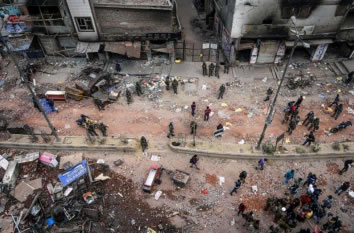
After every terror attack, Kashmiris living in India invariably pay the cost. Regardless of their innocence, they become the first and easiest targets of public suspicion, police scrutiny, and institutional bias. Their Kashmiri identity alone becomes the basis for harassment, police profiling, and social exclusion. Each incident triggers a familiar cycle: sudden verification drives in hostels and rented accommodations, police questioning without cause, landlords demanding that Kashmiri tenants vacate, and heightened surveillance of students, professionals, labourers, traders, truck drivers, and daily-wage workers. This trend of false attribution, stereotyping, and collective suspicion has intensified in recent years. The aftermath of the Pahalgam attack earlier this year and the Delhi blast last month made this painfully evident. Kashmiri students across several states reported profiling, aggressive questioning, and social hostility; workers and small traders avoided public spaces out of fear; and families back home remained anxious about their safety.
In many cities, local associations advised Kashmiris to stay indoors, avoid travel, and refrain from posting anything online that could be misconstrued. This recurring pattern reveals a disturbing reality: for ordinary Kashmiris living, studying, and working across India, every terror attack, no matter its location or perpetrators, becomes a personal risk. Kashmiri labourers working in Indian cities and small towns are particularly vulnerable. Many have been beaten, threatened, or forced to leave their workplaces after attacks. They often work in environments where mobs can quickly turn violent, landlords refuse to renew accommodation, and employers abruptly terminate jobs out of fear or prejudice. For many, a single incident of violence can mean the loss of their only livelihood.
Truck drivers from Kashmir, transporting goods across Indian highways, face frequent humiliation and targeted questioning. At checkpoints, they are routinely stopped for prolonged inspections, subjected to verbal abuse, or forced to provide unnecessary documentation. In several cases, Kashmiri drivers have reported being manhandled, accused of “suspicious movement,” or detained without cause. Similarly, IT professionals and medical practitioners in the private sector face backlash. After major incidents, they may be singled out in workplaces, questioned by security departments, or denied entry. Many have lost jobs due to employer fears, even when no allegations existed.
Students remain the most visibly profiled group. Young Kashmiris studying at universities across India are subjected to regular police verification, surprise hostel checks, and monitoring of social media. In several states, students have been suspended, attacked by mobs, or booked under harsh laws for innocuous remarks or jokes online. Police profiling is widespread and systematic. Being Kashmiri is treated as a “risk factor in itself”. They are stopped more frequently, asked to prove their residence or purpose of stay, and have their phone numbers, Aadhaar details, and identities recorded even when no crime is reported. This constant surveillance reinforces the perception that they are inherently suspicious, creating an atmosphere of fear and humiliation that shadows their everyday lives.
The Jammu & Kashmir Students Association12 (JKSA) has documented numerous instances of profiling, eviction, and intimidation of Kashmiri students across northern Indian states such as Uttar Pradesh, Haryana, Rajasthan, and Delhi. According to reports, many students have been asked to leave their rented rooms or hostel accommodation, with some landlords pressuring Kashmiri tenants to vacate13.
11 https://www.aljazeera.com/news/2019/7/28/after-23-years-of-wrongful-imprisonment-kashmiri-men-return-home
12 “J&K students’ group alleges profiling of Kashmiri students after Delhi blast,” India Today, November 17, 2025”.
13 https://www.hindustantimes.com/cities/chandigarh-news/jk-students-association-kashmiri-students-being-harassed-pm-modi-must-intervene-101763408908318.html10GUILT B Y GEOGRAPHY
Chronology of major incidents & immediate fallout
1. 1996 Lajpat Nagar / Samleti (Dausa) blasts
2. Gujarat — Arrests of IT Professionals and Students
3. 2006 terrorism case in Gujarat
4. 2001 Parliament attack in Delhi—Fallout:
In the aftermath of these incidents, a number of Kashmiris—ranging from students to professionals—were arrested primarily on the basis of mere suspicion. However, court proceedings later revealed that the cases lacked substantive evidence, saying that much of the evidence presented was fabricated, and that law enforcement officials had acted under institutional and political pressure to produce swift results. — Systemic flaws and injustices
The judgments delivered by various courts reveal a disturbing pattern: Kashmiris have often been detained, charged, or treated as suspects without solid proof of wrongdoing. Instead of relying on concrete evidence, investigations and actions by authorities have frequently been driven by prejudice, and assumptions linked to the Kashmiri identity itself. In many cases, courts found that the individuals had no connection to the alleged offences, yet they had suffered arrests, long detentions, or harassment simply because they belonged to a community that is routinely viewed with suspicion. This shows how the legal and policing systems have, at times, punished people not for crimes committed, but for their identity as Kashmiri Muslims.
Structural Bias against Kashmiris
• Investigations reflect pre-existing bias.
• Police and security agencies often consider Kashmiri youth inherently suspicious.
Legal and Procedural Flaws
a) Coerced Confessions & Fabricated Evidence Courts have repeatedly observed:
• Confessions were obtained under duress.
• Evidence presented was not credible.
• Forensic reports were contradictory.
• Statements by SIT and police were inconsistent.
b) Court Observations on Malicious Cases
• Higher and Supreme Court decisions repeatedly highlighted:
• The accused were arrested solely because they were Kashmiri.
• The police failed to get to the truth.
• The case was malicious.
• The state violated the principles of justice.
c) Absence of Accountability
• No investigating officer has faced punishment, suspension, or even a formal warning.
• Courts have repeatedly pointed out the malice and violations of justice, yet the state has taken no
meaningful action to acknowledge or remedy the injustices suffered.
d) Slow Trials and Prolonged Legal Battles Many innocent Kashmiris spent years awaiting trial. Over this period:
• Homes were destroyed.
• Families suffered.
• Parents died without witnessing justice.
• Society stigmatized them as criminals.
• The state largely turned a blind eye to their suffering.
Media’s role as a de-facto mouthpiece for the government The Indian media has often acted as a de facto mouthpiece for the state, amplifying narratives that serve the government’s divisive agenda. By consistently portraying Kashmiris as “terrorists,” “anti-state elements,” or “suspect agents,” have reinforced stereotypes and legitimized suspicion against an entire community. Over the The epidemic of false terror charges & its toll on Kashmiris11 years, this persistent negative framing has shaped public perception in India, effectively criminalizing Kashmiri identity, causing Kashmiris to be treated as inherently suspect, and creating a fertile breeding ground for the dehumanization of the entire community.
In doing so, the media has played a central role in deepening social polarization and marginalizing Kashmiris, turning journalistic platforms into instruments of state power rather than impartial observers of truth.
Marathon Media Trials
• Presenting arrests as “Exclusive Breaking News”
• Ignoring court decisions
• Prioritizing inflammatory language, TRP, and political interests
Propagation of Hindutva-Nationalist Narrative In many Indian news channels, Kashmiris are portrayed as:
• Enemies
• Terrorists
• Security risks
'
Laws enabling injustices
A close examination of the draconian legal framework prevalent in Kashmir and across India reveals that the Indian state has routinely exploited these laws to suppress dissent and criminalize ordinary Kashmiris. Under the pretext of counter-terrorism, laws such as the PSA, UAPA, AFSPA, and others have been abused to systematically target dissenters. Ostensibly aimed at combating terrorism, these provisions have been transformed into instruments of fear, enabling arbitrary detentions, prolonged imprisonment without trial, and widespread criminalization of innocent citizens. By weaponizing these legal measures, the state has entrenched a climate of repression, undermining justice and perpetuating profound human suffering.
The following laws have been indiscriminately used:
• Armed Forces Special Powers Act (AFSPA)
• Public Safety Act (PSA)
• Unlawful Activities Prevention Act (UAPA)
• Terrorist and Disruptive Activities Act (TADA) (older cases)
• National Security Act (NSA)
These laws:
• Undermine the fundamental right to bail
• Lower the standard of evidence required for conviction
• Grant state agencies a license to arrest individuals based on mere suspicion
Legal Hindrances to Fair and Speedy Justice
Primarily, the excessive application and invocation of draconian laws such as the UAPA and PSA — which criminalize almost everything under the broad and ambiguous category of “unlawful activity” — severely undermines the judicial process and obstructs the dispensation of speedy justice.
These laws invert fundamental principles of criminal jurisprudence by placing the burden of proof on the accused, while simultaneously granting sweeping powers to investigating agencies. For example, under the UAPA, bail is virtually impossible, ensuring that the accused remain incarcerated for years before their innocence is eventually established in court.
Compounding this injustice is the longstanding practice of imprisoning Kashmiri detainees in jails located thousands of kilometers away from their homes. This makes it nearly impossible for families — many of whom are economically vulnerable — to undertake long and expensive journeys, attend court hearings, or arrange consistent legal representation.
The financial burden of travel, accommodation, legal fees, and related expenses becomes unbearable, effectively denying the accused the constitutional right to a fair defence. In this way, the legal framework itself becomes a tool of punishment, long before any conviction is reached. 12GUILT B Y GEOGRAPHY
Conclusion
These cases, though only the tip of the iceberg, reveal a dangerous and deep-rooted pattern in which the Indian state apparatus resort to instant attribution, pre-determined guilt, and manufactured accusations. Innocent Kashmiris continue to fall victim to a divisive and deeply communal mindset that has now permeated the Indian state machinery. Whenever an untoward incident occurs anywhere in mainland India, Kashmiris—whether students, medical practitioners, or ordinary businessmen—are routinely picked up, falsely charged under terror laws, and presented as convenient scapegoats to deflect criticism, manipulate media narratives, or advance narrow political agendas.
In many instances, arrests are made before investigations even begin, and confessions are extracted through coercion, ensuring that the truth becomes secondary to the state’s desire to display “results.” This systemic practice has created an environment where the criminalization of Kashmiri identity itself becomes normalized. Ordinary civilians are dehumanized to the extent that their innocence no longer shields them from suspicion. Their freedoms, careers, families, and reputations are destroyed long before any court eventually sets them free after years or decades of wrongful incarceration. Justice for victims is not merely a constitutional ideal or a theoretical promise; it is a lived, daily struggle against structures designed to deny Kashmiris fairness, dignity, and due process. The overwhelming prejudice against Kashmiris in India enables impunity at every stage—from arrest and investigation to prosecution and media trial.
The lives, dignity, and hopes of Kashmiris continue to be crushed under this machinery of prejudice and coercion. As long as the foundations of injustice in the Indian political and judicial system remain intact—in shape of unreformed laws, unaccountable institutions, biased investigations, and a political climate that rewards scapegoating—justice for victims will remain out of reach. Confronting and dismantling these entrenched patterns is the only path toward a future where their rights, dignity, and truth are no longer subordinated to the imperatives of state narratives.
RecommendationsJudicial Reforms
Fast-tracking cases involving prolonged pre-trial incarceration Accountability and punitive action against filing false or fabricated cases In view of the massive misuse of these laws, judicial reforms — including a thorough review of the PSA and UAPA and bringing them in consonance with international standards of justice — are imperative. Such reforms are essential to safeguard the fundamental rights of prisoners, particularly those arrested on mere suspicion and held in jails for years without trial or meaningful legal remedy. Accelerated hearings for long-pending cases, coupled with mechanisms to ensure accountability and punitive action against officials responsible for filing false or fabricated cases, are crucial to breaking this vicious cycle.
Without tangible consequences for wrongful arrests, coercive investigations, and deliberate misapplication of security laws, the pattern of false accusations and wrongful detentions will continue unchecked. Fast-tracking cases involving prolonged pre-trial incarceration, mandating judicial oversight of investigative conduct, and instituting penalties for abuse of power can collectively serve as strong deterrents. Such measures are essential to prevent innocent individuals from having their lives, reputations, and futures destroyed under the weight of baseless allegations.
2. Rehabilitation & Compensation
The state bears the responsibility to compensate victims financially, support their livelihood, and provide both legal help and psychological counseling after years of wrongful detention.
3. Media Accountability
Media accountability is equally essential to halt the nonstop dissemination of disinformation, concocted narratives, and propaganda. Without clear checks and standards, sensationalism continues to overshadow facts, The epidemic of false terror charges & its toll on Kashmiris13 further endangering already vulnerable communities. Ensuring responsible, ethical, and impartial reporting is critical for restoring public trust and preventing the media from becoming an instrument of bias and state-driven
narratives.


Related Reports