INTERNATIONAL CONCERNS OVER HUMAN RIGHTS IN JAMMU AND KASHMIR
INTERNATIONAL CONCERNS OVER HUMAN RIGHTS IN JAMMU AND KASHMIR


INTRODUCTION
Between September and December 2025, the situation in Indian- administered Jammu and Kashmir (IIOJK) emerged as a focal point of sustained international concern, marked by an unprecedented convergence of alarm from United Nations mechanisms, international human rights organizations, foreign legislatures, global media and press freedom watchdogs. This period reflected not isolated criticism but a cumulative global assessment that India’s post-2019 governance of Kashmir, particularly following the April 2025 Pahalgam attack, has entered a phase of intensified repression, collective punishment and democratic rollback, raising serious questions under international human rights and humanitarian law.
At the multilateral level, UN Special Rapporteurs and independent experts repeatedly flagged grave violations. Communications issued in September 2025 documented mass arrests, arbitrary detention of approximately 2,800 individuals, reports of torture and ill-treatment, demolition of civilian homes as collective punishment, surveillance of Kashmiri students and deportations of Muslims without due process. UN mandate-holders explicitly recalled their long-standing concerns over India’s counter-terrorism framework, particularly the Unlawful Activities (Prevention) Act (UAPA) and the Public Safety Act (PSA), and highlighted India’s failure to respond to the majority of UN communications. A subsequent UN experts’ press release in November reiterated that counter-terrorism operations in Kashmir were violating international human rights standards, despite condemnation of the Pahalgam attack itself, underscoring that security imperatives cannot justify systemic abuse.
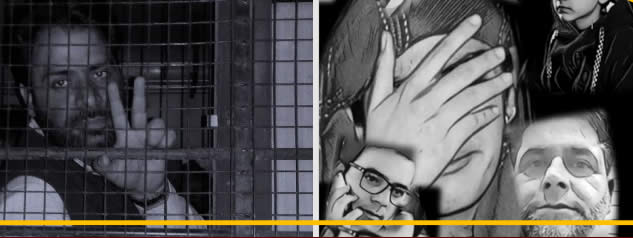
Parallel concerns were raised over structural discrimination against Muslims beyond Kashmir. UN Special Rapporteurs on freedom of religion or belief and minority issues expressed serious reservations about the Waqf Amendment Act (2025), warning that it could undermine religious autonomy and India’s obligations under international human rights law. This reinforced a broader global narrative that Kashmir is not an exception but part of a wider pattern of majoritarian governance and erosion of minority protections. International human rights organizations amplified these concerns through joint letters, statements and advocacy. The prolonged arbitrary detention of Kashmiri human rights defender Khurram Parvez, despite a UN Working Group opinion declaring it unlawful—became emblematic of India’s treatment of dissent.
Organizations such as OMCT, FIDH, CIVICUS, Amnesty International and RSF linked Kashmir directly to reprisals against UN cooperation, shrinking civic space and attacks on press freedom. India’s appearance in UN reprisals reports and the recommendation to downgrade its National Human Rights Commission further weakened its credibility as a Human Rights Council member. Global media and civil society reporting during this period provided granular evidence of repression on the ground. Reports detailed lethal force against protesters in Ladakh, economic strangulation through prolonged highway closures affecting Kashmir’s apple economy, mass raids following incidents outside the region and the transformation of Kashmir into an “information black hole” through censorship, raids on media offices and harassment of journalists and writers. These accounts were reinforced by watchdogs such as RSF, CPJ, IFJ and Index on Censorship, which warned of a near-total collapse of press freedom.
Taken together, developments from September to December 2025 demonstrate that the Kashmir issue has re-entered global human rights discourse not merely as a territorial dispute, but as a sustained crisis of legality, accountability and fundamental freedoms. The breadth and consistency of international concern during this period underscore an urgent need for scrutiny, dialogue and compliance with international norms.
METHODOLOGY
This report is based on a qualitative, desk-based research methodology designed to systematically document, analyze and contextualize international concerns regarding the human rights situation in Indian-administered Jammu and Kashmir between September and December 2025. Primary sources include official communications, press releases and observations issued by United Nations Special Rapporteurs, independent UN experts and other UN human rights mechanisms. These were examined to identify recurring patterns of concern, legal assessments and references to India’s international human rights obligations, particularly in relation to counter-terrorism measures, minority rights and freedom of expression.
The report draws on statements, joint letters and advocacy materials released by international and regional human rights organizations, including Amnesty International, OMCT, FIDH, CIVICUS, RSF, CPJ, IFJ and other credible civil society actors. These materials were used to corroborate UN findings, assess the continuity of documented violations and capture civil society perspectives on accountability, reprisals and civic space. International media reporting by reputable outlets was reviewed to provide factual grounding, show on-the- ground impacts and contextualize policy decisions and security operations within their socio-economic and political consequences.

We have received information regarding the arrest and detention of around 2,800 individuals in Jammu and Kashmir and their ill- treatment in detention; the demolition of homes in acts of collective punishment; the surveillance of Kashmiri students; the increase in hate speech against and harassment of the Muslim community as a whole; and the deportation without due process of around 1,900 Muslims since the attack. We recall concerns raised by Special Procedures mandate-holders regarding the counter-terrorism legislative and regulatory framework applicable to Jammu and Kashmir since the abrogation, in August 2019, of its special autonomous status pursuant to article 370 of the Indian Constitution (IND 6/2023). We have also addressed broader concerns regarding India’s counter-terrorism framework, namely the Unlawful Activities (Prevention) Act (UAPA) and Public Safety Act (PSA) (IND 7/2020 and IND 6/2023). We also call attention to the multiple communications issued by Special
Procedures mandate-holders on individual allegations of human rights violations, including arbitrary detention, extrajudicial killings, enforced disappearance, torture and ill-treatment, forced evictions and home demolitions and intimidation of and reprisals against human rights defenders, journalists, lawyers, political dissidents and Muslims and other minorities in Jammu and Kashmir, all on the basis of counter-terrorism or national security more broadly (IND 4/2020; IND 6/2020; IND 8/2020; IND 11/2020; IND 4/2021; IND 9/2021; IND 11/2021; IND 15/2021; IND 19/2021; IND 21/2021; IND 5/2022 and IND 6/2023). We regret having only received a reply to IND 6/2020 and encourage your Excellency’s Government to reply to the other communications.

We have the honour to address you in our capacities as Special Rapporteur on freedom of religion or belief and Special Rapporteur on minority issues, pursuant to Human Rights Council resolutions 58/5 and 52/5. In this context, we would like to bring to the attention of your Excellency’s Government some observations concerning the Waqf Amendment Act (2025) (“2025 Act”)1, which alters the way Islamic endowments are established, managed and protected in India. The 2025 Act has been examined in light of applicable international human rights standards. We believe the effective implementation of this law would have significant implications for India’s ability to fully uphold its obligations to respect, protect and fulfil human rights, particularly the rights to freedom and religion and belief.

PRESS RELEASE BY THE UN EXPERTS

GENEVA – UN experts* today expressed alarm about serious human rights violations committed by Indian authorities following the 22 April 2025 terrorist attack in Pahalgam, in Indian-Administered Kashmir, which killed 26 people. “We unequivocally condemn the brutal terrorist attack on a tourist area and extend our condolences to the victims, their families and the Government of India. However, all governments must respect international human rights law while combating terrorism,” the experts said. The experts highlighted the persistent nature of violations in Jammu and Kashmir, with several human rights defenders, including Irfan Mehraj and Khurram Parvez, being arbitrarily detained for years under draconian security laws. “We urge the immediate unconditional release of all individuals arbitrarily detained in Jammu and Kashmir.”
LETTERS BY INGOS
INDIA: INTERNATIONAL HUMAN RIGHTS GROUPS REITERATE CALL FOR RELEASE OF DETAINED KASHMIRI HUMAN RIGHTS DEFENDER KHURRAM PARVEZ ON HIS BIRTHDAY
We, the undersigned organisations including the International Federation for Human Rights (FIDH) and the World Organisation Against Torture (OMCT), within the framework of the Observatory for the Protection of Human Rights Defenders, call for the immediate and unconditional release of human rights defender Khurram Parvez. Khurram has been arbitrarily detained without trial for four years in Rohini prison in India, on politically motivated charges under the Unlawful Activities (Prevention) Act (UAPA), an Indian counter-terrorism law that violates international law and human rights standards.
Signed by:
• Asian Federation Against Involuntary Disappearances (AFAD)
• Asian Forum for Human Rights and Development (FORUM-ASIA)
• CIVICUS: World Alliance for Citizen Participation
• Front Line Defenders
• International Federation for Human Rights (FIDH), within the framework of the Observatory for the Protection of Human Rights Defenders
• Kashmir Law and Justice Project (KLJP)
• World Organization Against Torture (OMCT), within the framework of the Observatory for the Protection of Human Rights Defenders
RESEARCH BRIEFING AT UK PARLIAMENT Dec 04, 2025 UK Parliament GOVERNMENT SUPPORT FOR SELF-DETERMINATION IN KASHMIR
Successive Conservative and Labour governments have reiterated the UK’s longstanding position that the dispute over Kashmir is bilateral and can only be solved through negotiations by both sides, taking into account the wishes of the Kashmiri people. Asked most recently in June 2025, if it was the policy of the Foreign, Commonwealth and Development Office “that the people of Kashmir should have the right to a referendum to determine their future”. The government reiterated its longstanding position: India and Pakistan are important friends of the UK. We encourage both to engage in dialogue and find lasting, diplomatic solutions to maintain regional stability. The UK Government’s longstanding position on Kashmir that it is for India and Pakistan to find a lasting political resolution on Kashmir, considering the wishes of Kashmiri people.
STATEMENT BY INTERNATIONAL ORGANIZATIONS INDIA: MEMBERSHIP AT THE HUMAN RIGHTS COUNCIL
SHOULD REFLECT COMMITMENT, NOT CONTEMPT, FOR HUMAN RIGHTS
On 23 April 2025, the Global Alliance of National Human Rights Institutions recommended downgrading India’s National Human Rights Commission from “A” to “B” status, citing concerns over independence and political interference. India has also failed to ratify key treaties, including the Convention against Torture (CAT) and the Convention on Enforced Disappearance (CED). Equally serious are patterns of intimidation and reprisals. India has repeatedly appeared in the UN Secretary-General’s reports on reprisals for targeting individuals cooperating with UN mechanisms. The Working Group on Arbitrary Detention found the detention of Kashmiri human rights defender Khurram Parvez to be arbitrary and called for his immediate release; he remains detained under the Unlawful Activities (Prevention) Act.
INDIA: ARBITRARILY DETAINED WITHOUT TRIAL FOR FOUR YEARS, KHURRAM PARVEZ MUST BE RELEASED
21 November 2025 - Khurram Parvez is the Coordinator of Jammu Kashmir Coalition of Civil Society (JKCCS) and was appointed Deputy Secretary-General of the International Federation for Human Rights (FIDH) in March 2023. He has, for years, documented human rights violations in Indian-administered Kashmir, including enforced disappearances and extra-judicial killings. He cooperated extensively with the United Nations (UN) human rights mechanisms in pursuit of justice and accountability for human rights violations. He was awarded the 2023 Martin Ennals Award for his tireless human rights
work.
Indian authorities have systematically persecuted Khurram for his human rights work. India’s National Investigation Agency arrested him on 22 November 2021 on various trumped-up charges including “waging, or attempting to wage war, or abetting waging of war”,” “punishment for conspiracy to wage war” against the Government of India, “raising funds for terror activities” and “punishment for conspiracy”. In March 2023, Khurram was charged in a second case while being in detention on fabricated charges of “terror financing” along with independent journalist Irfan Mehraj, who was formerly associated with JKCCS for their human rights work.
The UN Working Group on Arbitrary Detention (WGAD) in its opinion published in June 2023, stated that Khurram’s detention was arbitrary and called on the Indian authorities to immediately release him. To date, the Indian authorities have not responded to the WGAD or provided any updates to the Working Group regarding Khurram’s arbitrary detention.
INDIA: CHIEF MINISTER’S REMOVAL OF WOMAN’S HIJAB DEMANDS “UNEQUIVOCAL CONDEMNATION”
Responding to a video circulating on social media allegedly showing the Chief Minister of Bihar Nitish Kumar pulling down Nusrat Parveen’s hijab during a government function, Aakar Patel, Chair of Board at Amnesty International India, said: “This act was an assault on this woman’s dignity, autonomy and identity. When a public official forcibly pulls down a woman’s hijab, it sends a message to the general public that this behavior is acceptable. No one has the right to police a woman’s faith or clothing. “Such actions deepen fear, normalize discrimination and erode the very foundations of equality and freedom of religion. This violation demands unequivocal condemnation and accountability. Urgent steps must be taken to ensure that no woman is subjected to such degrading treatment.”
US COMMISSION REPORT
SYSTEMATIC RELIGIOUS PERSECUTION IN INDIA
While Modi has attempted to publicly distance himself from the RSS, BJP policies reflect the RSS’s Hindutva oriented objectives and the two organizations remain intertwined. These goals include eliminating the special status of Kashmir, constructing a Hindu temple in Ayodhya and establishing a uniform civil code to nullify existing personal laws for each religious group, all of which the BJP has implemented under Modi’s leadership in addition to other policies that disenfranchise religious minorities. In 2019, after securing an additional 21 seats in Parliament, Prime Minister Modi’s government revoked the special status of Indian-administered Kashmir, which is majority Muslim, making it a “Union territory” under direct rule of New Delhi. The same year, the government passed the Citizenship (Amendment) Act, providing fast-tracked citizenship to religious minority communities fleeing persecution in Bangladesh, Afghanistan and Pakistan.
INTERNATIONAL MEDIA COVERAGE BY LEADING NEWS OUTLETS
‘GONE TO WASTE’: KASHMIR GROWERS WATCH APPLES ROT AS KEY HIGHWAY IS BLOCKED
The Kashmir region contributes almost 80 percent of India’s apples. But 4,000 trucks carrying them stand stranded. Two trucks bearing his apples worth more than $10,000 are among rows of stranded carriers that stretch for miles along a key highway connecting his city, Baramullah, in Indian-administered Kashmir to the remainder of India. Their tarpaulin covers bulge with crates of fruits that have begun to blacken and collapse under the weight of rot. Horticulture forms the backbone of Indian-administered Kashmir’s economy, with the valley producing about 20–25 million metric tonnes of apples every year – roughly 78 percent of India’s total apple output, according to data Al Jazeera collected from fruit growers’ associations.
The highway blockade coincides with the peak harvest season in Kashmir, locally called “harud”, during which apples, walnuts and rice are gathered from thousands of orchards and fields across the valley. “It’s not just me or my village – this crisis [road closure] is hitting all of Kashmir’s apple growers. Our entire livelihood depends on this harvest,” said Bhat, calling it a second blow to the region’s economy this year after the Pahalgam attack in April, when suspected rebels killed 28 people, severely disrupting tourism – another key sector in the valley.
INDIA: AUTHORITIES MUST IMMEDIATELY INVESTIGATE USE OF LETHAL FORCE AGAINST LEH PROTESTERS
Responding to reports that at least four people were killed and more than 50 injured after police opened fire on protesters in Leh city in the Union Territory of Ladakh yesterday, Aakar Patel, Amnesty International India’s Chair of Board, said: “While there are reports that a group of people had become violent, the use of lethal ammunition cannot be justified – even to contain widespread violence. Any use of firearms in the context of an assembly must be an absolute last resort, limited to targeted individuals and only then if strictly necessary to confront an imminent threat of death or serious injury. The indiscriminate use of firearms against protesters is always unlawful.
“There must be an immediate investigation into how these firearms were deployed, why police used lethal force against protesters that were largely peaceful and why other methods of crowd control were apparently not attempted first. The indiscriminate use of firearms against protesters is always unlawful Aakar Patel, Amnesty International India’s Chair of Board “We call for the immediate de-escalation of tensions and urge the government to respect people’s rights while addressing this situation. People in Ladakh have the right to peacefully protest against the government and they must be able to exercise this
right without fear of being shot.”
LADAKH STATEHOOD ACTIVIST ARRESTED DAYS AFTER VIOLENT CRACKDOWN BY MODI
A renowned environmentalist at the forefront of a protest movement in the Indian region of Ladakh has been arrested amid a wider crackdown on dissent under the prime minister, Narendra Modi. Sonam Wangchuk, an activist, engineer and inventor, has been leading a lengthy agitation against the Modi government, calling for statehood and greater protections to be granted to his home region of Ladakh. He was arrested on Friday afternoon, on his way to address a press conference. His detention came after demonstrations in the regional capital of Leh turned violent on Wednesday. The local offices of Modi’s Bharatiya Janata Party (BJP) were among the buildings set on fire. The police responded with live ammunition, killing at least four protesters who were demanding autonomy and statehood for Ladakh.
INDIA: JAMMU AND KASHMIR, AN ENTIRE REGION TURNED INTO AN BLACK HOLE FOR INFORMATION
Six years after its autonomy was revoked, the union territory of Jammu and Kashmir has become an “information black hole” as reliable news on the area is scarce. The journalists who strive to keep the public informed do so under constant pressure, danger and severe obstacles to their work. Reporters Without Borders (RSF) is once again sounding the alarm to the scale of the press freedom violations occurring in this region and calls on the authorities to restore an environment where independent journalism is possible. “Media professionals in Jammu and Kashmir operate in a climate of permanent intimidation, marked by severe restrictions and constant psychological pressure.
This threatening reality endangers both their safety and the public’s access to free and independent information, in a region that has become an information black hole in India. RSF urges the local authorities to respect press freedom, guaranteethe free practice of journalism and reporters’ safety and allow independent media to operate in Jammu and Kashmir.
INDIA: CYBERBULLYING CAMPAIGN TARGETS JOURNALIST WHO CRITICISED THE WHITEWASHING OF POLITICAL REALITIES IN A FILM ABOUT KASHMIR
Kashmiri freelance journalist Gafira Qadir has been the target of a coordinated online harassment campaign due to her film review on the British news site Middle East Eye in which she denounced the erasure of the political realities of Kashmir in the film “Song of Paradise”. Reporters Without Borders (RSF) strongly condemns this offensive — orchestrated by Hindu nationalist propaganda networks— and calls on the Indian authorities to identify those responsible for the harassment and bring them to justice. “RSF is alarmed by this online hate campaign against freelance journalist Gafira Qadir, a worrying new example of the harassment plaguing media professionals covering sensitive issues in Kashmir.
We call on the Indian authorities to identify and prosecute those responsible for threatening and harassing the journalist, whether they are acting openly or through anonymous, orchestrated campaigns. Press freedom in India cannot be left at the mercy of troll networks. Social media platforms must also fully assume their role as moderators by preventing the targeted harassment and intimidation of journalists.
SILENCE IN THE VALLEY: THE BRUTAL REPRESSION OF KASHMIRI WRITERS
Recently, while a first-of-its-kind book fair was being organised, Ishfaq, a retired teacher and poet, asked one of the panelists how free the press was. The irony is that while the government of the day was celebrating the book fair and promoting a book-reading culture, the home department, on the sixth anniversary of the abrogation of special status, came up with a list of books to be banned in the region. The reasons cited were that these 25 books, which included those by internationally acclaimed authors, promoted secessionism. One of the most widely known writers on the list was Booker Prize-winner Arundhati Roy.
Immediately after the passing of the order, many booksellers were raided in different parts of Kashmir. The search operation was mainly carried out by local police in the central, south and northern areas of the Himalayan region. Booksellers were questioned about the banned books. “We do not keep any books which are remotely connected to Jamaat or those written by separatists,” says a local bookseller in Handwara town in North Kashmir. Glimpsing books which were once available everywhere is a rarity nowadays. Some dealers have even shifted to other types of trade, abandoning their cherished profession of bookselling.
THE KASHMIR OCCUPATION: A HISTORY OF DENIAL
On October 27, 1947, Kashmiris worldwide observe Black Day as the beginning of India’s unlawful occupation of the region. The occupation, which included human rights violations, was imposed under oppressive laws. On July 19, 1947, Kashmiri representatives unanimously passed a resolution calling for the state’s accession to Pakistan. This historic resolution was based on the Indian partition plan, the state’s religious, geographical, cultural and economic proximity to Pakistan and the aspirations of millions of Kashmiri Muslims. The Kashmir conflict has been transformed into a nuclear flashpoint and clouds of war will remain in South Asia until an enduring solution is based on UN resolutions and the desires of the Kashmiri people.
Kashmiris share an ideological alignment with Pakistan and such ideology cannot be extinguished through force. The Kashmiris will not give up the freedom struggle despite oppression. Since 1947, Pakistan has been in solidarity and in support of the oppressed Kashmiris and will remain so till the dispute is solved according to the resolutions of the UNSC and the desires of the Kashmiri people. In line with United Nations Security Council resolutions, Pakistan maintains that the Kashmir issue should be resolved solely through an UN-supervised plebiscite.
COLLECTIVE PUNISHMENT: HOW THE DELHI BLAST BECAME A PRETEXT FOR REPRESSING KASHMIRIS
By November 13, Kashmir—hundreds of miles from the blast site—became the primary target. In Kulgam district alone, police conducted coordinated raids at over 200 locations. Over the span of four days, authorities carried out more than 400 cordon-and- search operations across the district, focusing on areas previously associated with encounters and alleged militant hideouts. Officials confirmed that approximately 1500 people with alleged links to banned pro-freedom organizations have been questioned and detained. Many were bound down and transferred to District Jail Mattan under preventive detention laws—held indefinitely without charges or trial.
Police seized documents, digital devices and what they termed “incriminating materials,” though no independent verification was provided. Similar operations swept across Baramulla, Budgam, Islamabad (known as Anantnag as well), Pulwama and Shopian, with authorities conducting over 30 additional cordon-and-search operations in Baramulla alone. Homes of militants killed months or years earlier were raided, their families interrogated and relatives detained on suspicion of association.
INDIA: POLICE RAID KASHMIR TIMES OFFICE
Jammu and Kashmir (J&K) police raided the Jammu office of the Kashmir Times on November 20, accusing the newspaper of promoting secessionist ideology. The International Federation of Journalists (IFJ) condemns the censorship of independent media outlets and the ongoing repression of press freedom in J&K by Indian authorities. The IFJ said: “The consistent state-led censorship in Jammu and Kashmir continues to stifle press freedom and silence critical voices. IFJ urges the authorities to uphold press freedom as enshrined in India’s constitution and cease the persecution of independent journalism in the region.”
KASHMIR IS FOCUS OF ARRESTS AFTER DELHI CAR BLAST LINKED TO ‘TERROR MODULE’
Police have carried out raids and made several arrests across the Indian region of Kashmir in the aftermath of a car explosion in Delhi that left 13 people dead. On Wednesday, the Indian government confirmed it was treating the blast as a “terror incident” perpetrated by “anti-national forces”. The explosion took place outside one of India’s most significant monuments during rush hour on Monday evening. Initially, eight people were confirmed dead, but the figure had risen to 13 by Friday as more victims succumbed to their injuries. It is one of the deadliest terror attacks to target India’s capital in more than a decade. Narendra Modi, the Indian prime minister, described the incident as a “conspiracy”, while his home minister, Amit Shah, vowed to “hunt down each and every culprit behind this incident”.
Adding to the febrile atmosphere, at least seven people were killed and 27 injured on Friday night after an explosion at a police station in Srinagar, Kashmir’s main city. According to local media, a large pile of confiscated explosives detonated, killing police officers and members of the forensics team. The authorities have yet to make any formal announcement about who they believe to be behind the Delhi attack. Unofficially, however, Indian investigators have said inquiries are continuing into “an interstate and transnational terror module” that was targeted by the police in the days before the explosion.
IAMC WELCOMES USCIRF’S REPORT ON RSS, BJP’S “INTERTWINED” OBJECTIVES IN SYSTEMATIC RELIGIOUS PERSECUTION IN INDIA
Police in Indian-administered Kashmir have raided an office of the Kashmir Times, local news The report opened with an examination of the links between key BJP officials, including Prime Minister Narendra Modi and Home Minister Amit Shah and the RSS, which USCIRF labeled as a “Hindu nationalist organization” whose “primary mission” is to turn India into a Hindu state and has been “involved in acts of extreme violence and intolerance against members of minority groups for decades.” “While Modi has attempted to publicly distance himself from the RSS, BJP policies reflect the RSS’s Hindutva-oriented objectives and the two organizations remain intertwined,” the report stated.
These objectives, USCIRF stated, include “eliminating the special status of Kashmir, constructing a Hindu temple in Ayodhya and establishing a uniform civil code to nullify existing personal laws for each religious group, all of which the BJP has implemented under Modi’s leadership in addition to other policies that disenfranchise religious minorities.” The report named the Foreign Contribution Regulation Act (FCRA), the 1967 Unlawful Activities Prevention Act (UAPA), the 2019 Citizenship (Amendment) Act (CAA), the National Register of Citizens (NRC), the 2025 Waqf Bill, the 2025 Immigration and Foreigners Bill, anti-conversion and cow slaughter laws and Article 295A of the Penal Code, which “functions as a blasphemy law,” as “discriminatory laws that target and directly impact religious minority communities.”
Even though the Kashmir Times’ editorial offices in Jammu have been closed for four years, the Jammu and Kashmir State Investigation Agency (SIA) raided them and seized professional equipment. Reporters Without Borders (RSF) condemns this unacceptable attack of one of the region’s few independent media outlets and calls for the false charges against the newspaper and its editor-in-chief to be dropped. “The Kashmir Times is a recurring target of the authorities in a context of increased repression of the media in Jammu and Kashmir – a region that has become a virtual black hole as far as information is concerned, since its autonomy was revoked in 2019. RSF condemns the punitive targeting of an independent media outlet and a fabricated case designed to silence one of the few critical voices that continues to cover Kashmir. The NGO calls on the Indian authorities to put an end to this harassment and drop the false charges against the media outlet and its editor-in-chief.
POLICE RAID KASHMIR TIMES MEDIA OFFICE IN JAMMU: REPORTS
Kashmir Times says raid in Indian-administered Kashmir marks ‘yet another attempt to silence’ its reporting. Police in Indian-administered Kashmir have raided an office of the Kashmir Times, local news outlets are reporting, fuelling concerns about a deepening crackdown on press freedom in the disputed territory. The State Investigation Agency, a branch of the Jammu and Kashmir Police, carried out searches at the office in Jammu on Thursday, The Hindu newspaper and other outlets reported. The police agency did not immediately release a statement on the raid, The Hindu said. It was not immediately clear what prompted the incident, but some news outlets said authorities have accused the Kashmir Times of promoting activities against the state.
The Kashmir Times rejected that allegation, describing the raid on its office as “yet another attempt to silence us”. “The bizarre allegations against us are baseless,” the news outlet said in a statement shared on its website on Thursday. “Criticising the government is not the same as being inimical to the state. In fact, it is the very opposite,” it said. “A robust, questioning press is essential to a healthy democracy. Our work of holding power to account, investigating corruption, amplifying marginalised voices strengthens our nation. It does not weaken it.”
The Committee to Protect Journalists (CPJ), a global press freedom organisation, also raised concerns about the raid and called on police to return any documents or other property that was seized. “The raid on the Kashmir Times office is deeply troubling and raises concerns about increasing pressure on media outlets in Jammu and Kashmir,” Kunal Majumder, CPJ’s Asia-Pacific programme coordinator, said in a statement.
INDIAN AUTHORITIES RAID KASHMIR TIMES’ JAMMU OFFICE, SEIZE EQUIPMENT
New Delhi, November 20, 2025—Police in the Indian-administered territory of Jammu and Kashmir must return any documents or other property seized during Thursday’s raid on the Kashmir Times, reported by multiple news outlets and ensure that members of the news outlet are not threatened with criminal charges for their work, the Committee to Protect Journalists said. “Reports of a raid on the Kashmir Times office are deeply troubling and raise concerns about increasing pressure on media outlets in Jammu and Kashmir,” said CPJ Asia-Pacific Program Coordinator Kunal Majumder. “Authorities must clearly explain the legal basis for this action and ensure that any investigation is conducted with transparency and full respect for due process. News outlets should not face punitive action simply for doing their journalistic work.”
UN EXPERTS ALARMED BY ‘SERIOUS HUMAN RIGHTS VIOLATIONS’ COMMITTED BY INDIA IN KASHMIR
In a statement, the experts said: “We unequivocally condemn the brutal terrorist attack on a tourist area and extend our condolences to the victims, their families and the Government of India. However, all governments must respect international human rights law while combating terrorism.” Following the attack, Indian authorities launched widespread operations throughout Jammu and Kashmir. According to the experts, these operations resulted in the arrest and detention of around 2,800 people, including journalists and human rights defenders. Some detainees were held under the Public Safety Act and the Unlawful Activities (Prevention) Act, laws that allow extended detention without charge or trial and contain definitions of terrorism that the experts said are vague and overly broad. Reports received by the experts indicated that some detainees were allegedly tortured, held incommunicado and denied access to lawyers and family members.
“We condemn reports of arbitrary arrests and detentions, suspicious deaths in custody, torture and other ill-treatment, lynchings and discriminatory treatment of Kashmiri and Muslim communities,” they said.
‘WHAT’S OUR FAULT?’: INDIA’S EXPULSION OF PAKISTANIS STILL SPLITS FAMILIES
After the Pahalgam attack in April, India deported 800 Pakistanis. Children were separated from their mothers, husbands from their wives. Seven months later, the wait to reunite goes on — with no end in sight. India blamed Pakistan for the Pahalgam attack as well and swiftly moved to downgrade all diplomatic ties, suspend bilateral trade and place a key water treaty in abeyance. Two weeks after the killings, in early May, India and Pakistan engaged in an intense four-day air war, each striking the other’s military bases. Dozens of people were killed on both sides — India insists it only hit “terrorists” in Pakistan, while Islamabad said civilians were principally the victims — before the neighbours agreed to a ceasefire.
But seven months later, the pause in fighting has meant little for hundreds of families, like Majid’s and Samina’s, that were broken apart by one of India’s moves. In the aftermath of the Pahalgam attack, India revoked all visas issued to Pakistani citizens residing in India, including medical and diplomatic visas, giving them an April 29, 2025 deadline to leave the country and closing the Attari-Wagah border in Punjab province’s Amritsar district on May 1. Nearly 800 Pakistanis – many of them married to Indian nationals in Kashmir and other parts of India – were deported. With authorities providing no clarity on whether those families will ever be reunited, the wait drags on for relatives on both sides of the border.
TYRANT OF THE YEAR 2025: NARENDRA MODI
India has been called the world’s largest democracy but under Narendra Modi that label might need an update. Threats to free speech in India have intensified dramatically.
INTERNATIONAL CONCERNS OVER HUMAN RIGHTS IN JAMMU AND KASHMIR | SEP–DEC 2025
Whether through internet shutdowns and blocks, the weaponisation of the heckler’s veto which allows groups and individuals - including members of the far-right Hindutva movement - to secure the censorship of content they disagree with, or plans to expand regulatory powers to criminalise speech. In the aftermath of April’s deadly Pahalgam attack in Indian administered Kashmir in which 26 people, mostly tourists were killed, Modi’s government blocked 16 Pakistani YouTube channels and restricted access to the social media pages of prominent Pakistani news organisations. The government also also blocked the respected Indian news website, The Wire. But Modi was not content just with attacking the media.
According to Assam’s Chief Minister, as of 7 June, 90 people were arrested as part of a crackdown on “anti-national and communal elements”, which included arrests based on social media content that was deemed to be “pro-Pakistan”. This was not limited to one state. The singer Neha Singh Rathore andsocial media influencer Dr Medusa were both booked on charges, including sedition, for social media comments made in relation to the government’s response to the attacks. Modi’s government has long seen the control of online speech as a guarantor of political dominance, both for their party and their belief in India as a Hindu nation. So by that measure 2025 has been a great success. Yes, the arrests related to the Pahalgam attacks have slowed, but the foundations for all speech remain fragile.
Harinder Baweja on conflict reporting, Kashmir’s wounds and India’s old and new fault lines From her entry into LeT’s Muridke complex after 26/11 to her reporting on Kashmir, Operation Bluestar and what still keeps the nation on edge. On the angst-ridden Kashmir Her chapters on trouble-torn Kashmir, which she has covered since the Rubaiya Sayeed kidnapping in 1989, are among the most engrossing in the book. A thread of sadness runs through the narration like a mournful beat in the background, as she explains how the ‘crown on India’s head’ came to be treated like a “piece of real estate”. After staying close to Kashmir events for more than three and half decades, her book tries to pinpoint why violence continues in Kashmir and why communities continue to support a certain brand of militant ideology.
“When I interviewed the father of Burhan Wani (the leader of Hizbul Mujahideen, a militant organisation), my head was spinning. It seemed like he was holding a classroom on jihad. Though he lost two sons to violence, he continued to talk in that language. Interestingly, both his sons, including Burhan, made the switch from being normal students to militancy. The question then is: why were educated boys leaving the comfort of their classrooms to pick up the gun?” she asks ‘Azaadi (freedom)’ in Kashmir means, she replied, “It is a sentiment, a call for liberation from oppression and human rights violations.

Related Reports